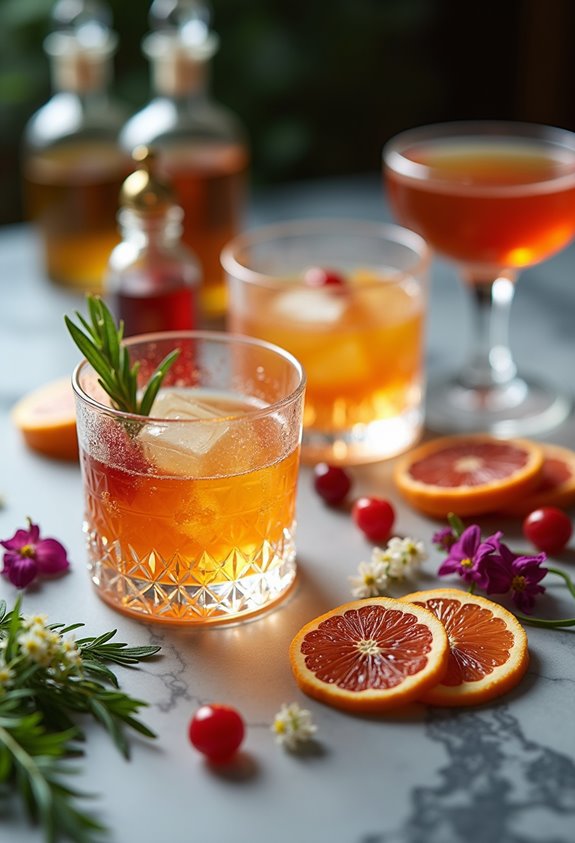
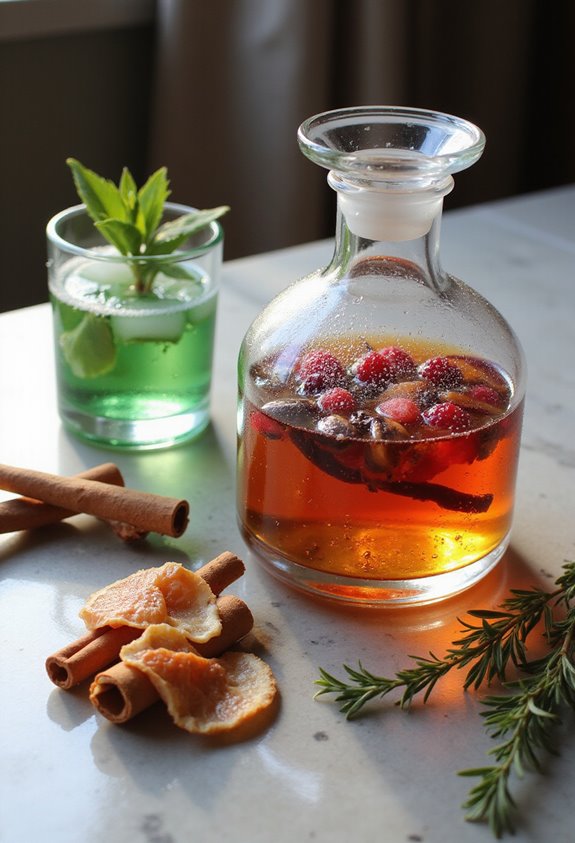

Infusing spirits at home can create unique cocktails by utilizing fresh herbs, fruits, and spices. Essential tools include airtight glass jars for infusions and durable bottles for storage. Techniques such as slow steeping, pressure infusion, and heat-assisted methods help extract flavors effectively. Timing is important, with most fruits needing 24 to 48 hours, while delicate herbs should not exceed 24 hours. Monitoring flavors and documenting recipes can enhance the infusion experience, leading to diverse and innovative cocktails. More techniques await exploration.
Key Takeaways
- Use airtight glass jars for infusing to prevent contamination and ensure optimal flavor extraction from fresh herbs, fruits, and spices.
- Select complementary ingredients that pair well with your base spirit, such as citrus with gin and vanilla with bourbon.
- Experiment with different infusion methods like slow steeping or pressure infusion for varied flavors and extraction rates.
- Regularly taste the infusion every 12 to 24 hours to achieve the desired flavor balance and avoid overpowering notes.
- Store your infusions in cool, dark places using sealable glass jars, and label them with dates to monitor freshness.
Essential Tools and Equipment for Infusing Spirits
Infusing spirits at home requires specific tools and equipment that facilitate the process and enhance the final product. Important infusion vessels include airtight glass jars, such as Mason jars, which prevent contamination and evaporation. Selecting wide-mouth jars aids in adding and removing ingredients. Durable glass bottles with tight seals are critical for storing finished infusions. Filtering and straining tools are also essential; a fine mesh strainer removes larger solids, while cheesecloth and coffee filters enhance clarity techniques for a pristine final result. Additionally, measuring tools, like jiggers and funnels, guarantee accurate ratios and prevent spills. Regular cleaning with proper tools is important to maintain the quality of both infusion vessels and straining equipment, guaranteeing peak results in home-crafted spirits. Using durable materials for your infusion tools can help ensure effective absorption and longevity during the infusion process.
Recommended Products
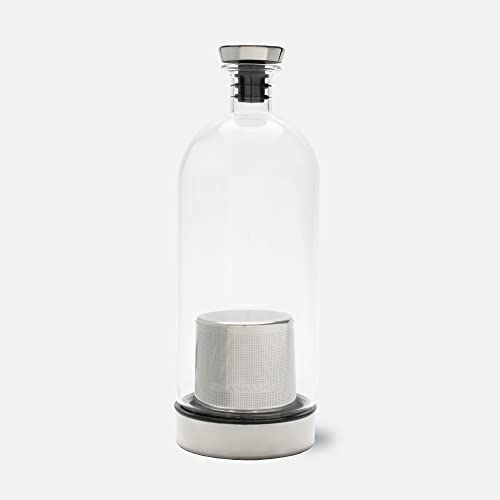
ALKEMISTA drink infusion kit helps you create and store handcrafted spirits with a simple single-bottle design. After infusing, transform this vessel into a sleek decanter for your creations.

Minimal square design and practical hermetic closure make Swing bottle ideal for serving drinks
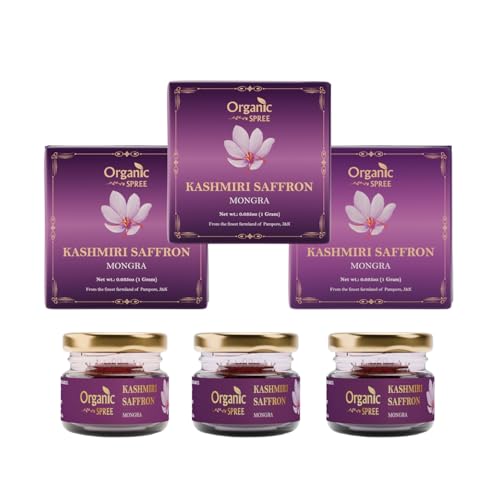
Organic Spree Kashmiri Mongra Saffron - Kashmiri Mongra Saffron is renowned as one of the finest and most sought-after varieties of saffron in the world. It is cultivated in the Kashmir region of India.
Choosing the Right Ingredients for Infusion
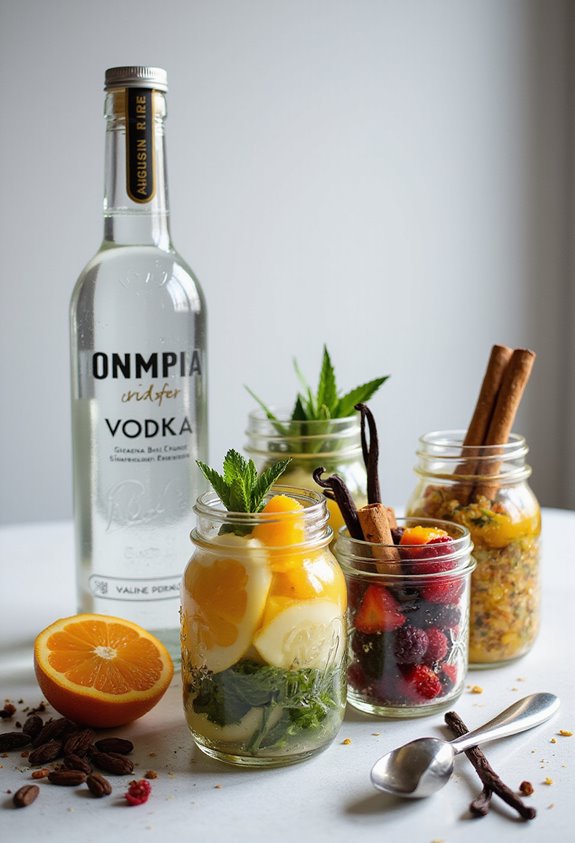
Choosing the right ingredients for infusion is paramount to achieving the desired flavors in homemade spirits. A variety of ingredients endow spirits with unique flavor profiles. Fresh herbs like rosemary and basil add aromatic notes, while whole spices such as cinnamon and cloves enhance complexity. Fruits impart sweetness; dried fruits often yield more concentrated flavors. Quality and freshness are essential, so sourcing organic ingredients is advised to avoid undesirable off-flavors. When selecting, consider ingredient compatibility with the base spirit. For example, citrus pairs well with gin, whereas vanilla complements bourbon. Proper ingredient preparation, such as slicing fruits or lightly muddling herbs, further optimizes flavor extraction. Thoughtful ingredient sourcing leads to memorable cocktails that connect people through shared experiences. Additionally, using high-quality ingredients can significantly enhance the overall drinking experience, ensuring your infused spirits are both flavorful and enjoyable.
Recommended Products

Premium Quality: Grade A Madagascar vanilla beans, vacuum-sealed for maximum freshness and flavor.

You'll LOVE our Green Cardamom Pods (Hari Elachi) by Rani Brand--Here's Why:
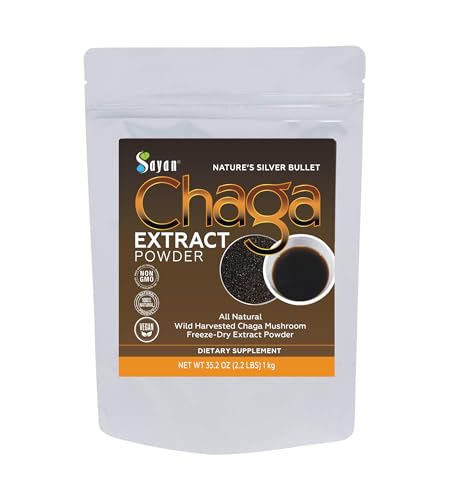
Live Long, Live Right: Unleash your potential with a natural drink that houses potent antioxidants that promotes a healthy immune system and contributes to a healthier life. Chaga’s resilient adaptogens improve overall well-being making you feel revitalized.
Preparation Techniques for Optimal Flavor
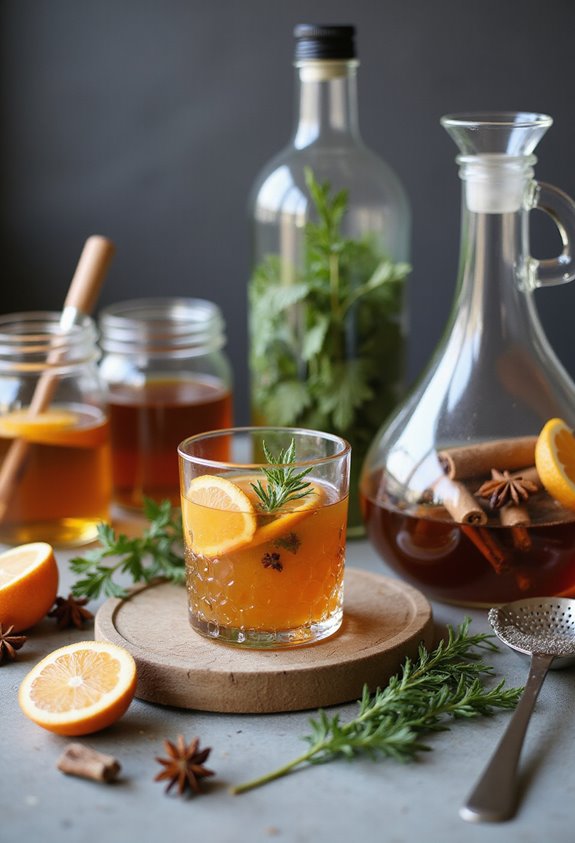
A variety of preparation techniques are essential in achieving ideal flavor during the infusion process. Proper herb selection is vital; fresh herbs should be gently muddled to release essential oils without breaking down excessively. Regarding fruit combinations, using sliced or zested pieces increases the surface area for better flavor extraction. Sealable glass jars maintain airtight conditions, preventing oxidation and ensuring flavor integrity. Ingredients must be thoroughly cleaned to eliminate any dirt or pesticides, enhancing purity. It is also advisable to select whole spices over ground ones to prevent cloudiness in the final product. Regular monitoring of the infusion time allows for careful control of flavor intensity, promoting a quality tasting experience for everyone involved. Additionally, incorporating cocktail bitters selections from a curated set can elevate the overall flavor profile of your infused spirits.
Recommended Products

ESSENTIAL BARWARE COLLECTION - This 20-piece cocktail shaker bar set includes Boston cocktail shaker tin, measured cocktail mixing glass, wooden muddler, cocktail strainer, double jigger, bar spoon, ice tongs, and more for every drink.
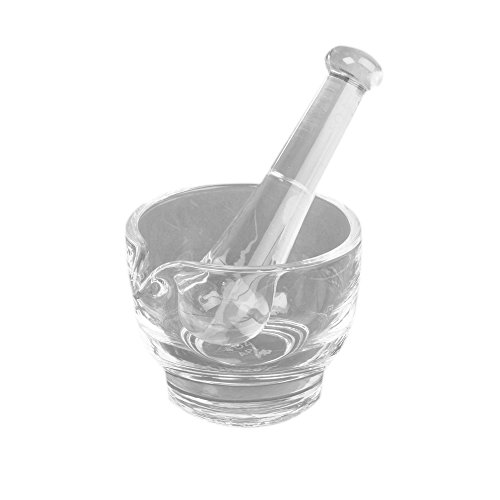

Drink Maker Bartender Kit: with each package, you will receive 16 drink muddlers; This sufficient pack ensures that you'll have plenty for a party or event or have enough as backups if needed
Understanding Different Infusion Methods
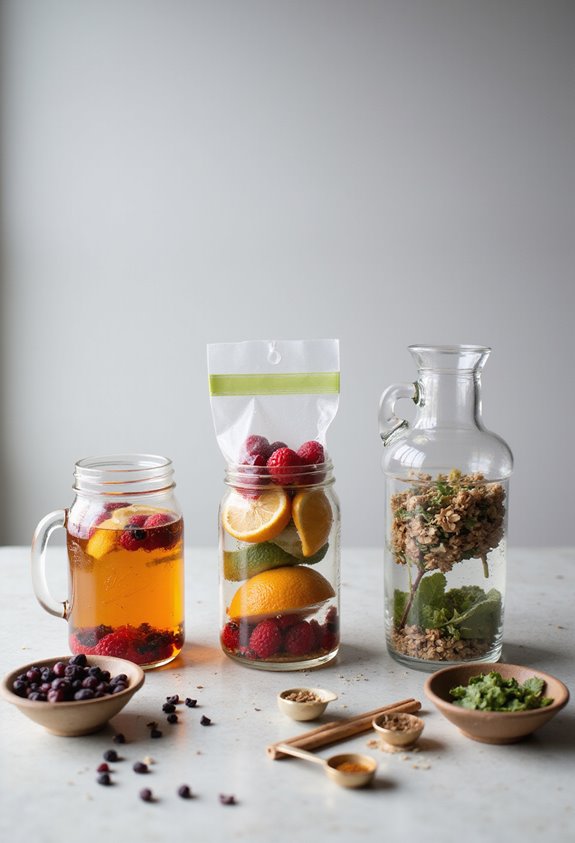
While exploring various infusion methods, it becomes evident that each technique offers distinct advantages tailored to specific ingredients. The pressure infusion method, for instance, provides rapid flavor extraction techniques by using a whipping siphon, enabling infusion within minutes. In contrast, slow steeping allows robust flavors to develop over several days, making it ideal for spices or citrus peels. Heat-assisted infusion strikes a balance, using controlled low heat to maintain flavor integrity while speeding up the process. Fat washing introduces savory profiles through lipids, diversifying experiences for spirit enthusiasts. Finally, mechanical crushing enhances flavor extraction by maximizing surface area contact. Each method creates unique infusion timeframes, inviting users to experiment and refine their cocktail creations, and can greatly benefit from the use of high-quality botanicals for superior flavors.
Timing Your Infusion for Best Results
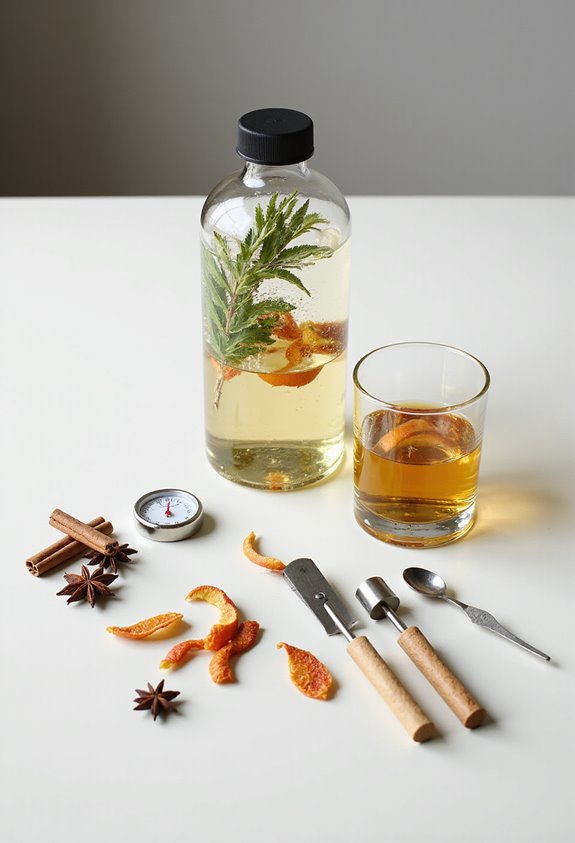
Timing plays an essential role in achieving ideal flavor during spirit infusion, as different ingredients demand varying durations for flavor extraction. For instance, spicy elements like chili peppers require 12 to 24 hours to avoid bitterness, while fruits typically benefit from 24 to 48 hours of infusion timing. Delicate herbs such as basil should be infused for less than 24 hours to retain freshness. Monitoring flavor throughout the process is critical. Regular tasting every 12 to 24 hours guarantees a proper flavor balance and prevents over-infusion. Additionally, using rapid infusion techniques can greatly shorten infusion times. Proper storage after infusion is equally important to maintain the spirit’s quality and prevent unnecessary oxidation, assuring the flavors remain vibrant for weeks. Incorporating a cocktail infusion kit can enhance your experimentation with various flavors and techniques.
Spirit and Flavoring Ratios to Consider
Understanding the appropriate spirit-to-flavor ingredient ratios is essential for successful infusion at home. A common starting point is a 1:1 infusion ratio** for fruits, nuts, and vegetables, facilitating a balanced flavor profile. Spicy peppers require a different approach; for example, half a jalapeño per 12 ounces of gin is recommended to prevent overpowering heat. Herbs typically follow a 1:2 ratio, using one part herb to two parts spirit, allowing for a more delicate flavor. Strong spices, such as cinnamon or clove, demand even smaller amounts to maintain flavor balance. Infusion ratios need to be adjusted based on the alcohol volume and flavor intensity, ensuring an enjoyable final product without overwhelming the palate or diluting the intended taste. Additionally, considering durable materials** in your mixology kit can enhance the infusion process by providing reliable tools for measuring and mixing.
Recommended Products
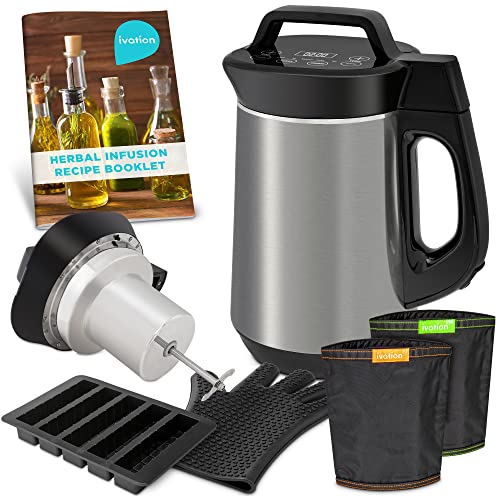
MAKE YOUR OWN HERB INFUSIONS | Versatile Machine Allows You to Extract Concentrated Flavor, Amazing Fragrance & Medicinal Benefits from a Variety of Fresh, Dried & Decarbed Herbs, Flowers, Nuts, Seeds & More | Great for Making Herb Butters, Dressings, Dips & Milks for Cooking, Lotions, Salves, Topicals & Tinctures

Tincture and Infused Oil Press - Designed for easy separation liquid out of tincture or infused oil and cleaning the unit afterwards.

The Ultimate Classic: Hand picked Assam Organic Black Tea is infused with the pure essence of bergamot; Its vibrant bouquet, with sweet notes of citrus, coupled with smooth, malty Assam, delivers palate rewarding experience; Delicious with milk and sugar
Popular Flavor Combinations to Explore
Exploring popular flavor combinations for spirit infusions can lead to unique and enjoyable beverages. Home enthusiasts may experiment with popular herb infusions such as vodka paired with fresh mint or basil, creating invigorating sips. Unexpected fruit combinations, like watermelon vodka or cherry bourbon, provide vibrant, seasonal flavors that appeal to varied palates. For daring cocktails, spicy infusion experiments blend elements like vodka infused with chili and lemongrass. Floral flavor profiles emerge from infusions like elderflower gin, introducing delicate aromas. Additionally, savory spirit blends, such as bacon-infused bourbon, showcase rich, bold tastes. Finally, complex tea infusions, like black tea and cognac, reveal layered flavors, heightening the infusion experience. These combinations invite creativity and belonging among cocktail enthusiasts.
Post-Infusion Processing Techniques
Once spirits have been infused, the next essential step involves a series of post-infusion processing techniques that enhance both clarity and flavor integrity. Straining techniques, such as using a fine mesh strainer or cheesecloth, are vital for separating solids and ensuring clarity. Double straining can improve final clarity, particularly with herbs or spices. Clean, dry containers should be used to avoid contamination. Flavor stabilization can be achieved by allowing strained infusions to rest briefly, enabling harmonious flavors to develop. For those seeking enhanced clarity, techniques may include cold filtering or employing activated charcoal in moderation. These methods collectively improve shelf life and maintain the infusion’s sought-after characteristics, ensuring a satisfying experience for all cocktail enthusiasts.
Proper Storage of Infused Spirits
Proper storage of infused spirits is vital to maintaining their quality and flavor over time. To achieve this, one should prioritize the right storage conditions and container types. Infused spirits should be kept in a cool, dark location, such as a dark cupboard or a dedicated wine fridge, to prevent exposure to sunlight and heat. Sealable glass jars or airtight bottles are recommended to avoid oxidation and maintain aroma integrity. Labeling containers with infusion dates and ingredients guarantees better tracking. While lower alcohol infusions often benefit from refrigeration, higher-proof spirits can remain at room temperature if stored properly. Monitoring for off-odors or cloudiness is essential, as these can indicate quality degradation. Regular taste checks help maintain the desired flavor profile.
Creative Experimentation With Unique Ingredients
Creative experimentation with unique ingredients can markedly elevate the process of infusing spirits at home. Culinary fusion allows enthusiasts to blend diverse flavors and techniques, enriching their infusions. Uncommon bases like vermouth, cognac, and Chartreuse are ideal for building distinct profiles. Ingredients such as artichokes, edible flowers, and underutilized botanicals like cherry tomatoes can inspire innovative combinations. Utilizing fresh herbs, including parsley and rosemary, introduces layers of complexity. The careful balancing of flavors through multiple ingredients demands precise infusion durations to prevent harshness. By incorporating seasonal and locally sourced produce, one can support sustainability while enhancing freshness. This botanical exploration not only transforms spirits but fosters a deeper connection to the craft of cocktail creation.
Cocktail Applications for Infused Spirits
Infused spirits have emerged as a transformative element in the world of mixology, offering bartenders and home enthusiasts alike a method to enhance traditional cocktails. Infusion experimentation allows creators to substitute standard liquors with unique flavors, leading to diverse cocktail variations. For example, herb-infused gins can deepen botanical profiles in classic Gin & Tonics, while tropical fruit-infused rums elevate the freshness of drinks like Piña Coladas. Additionally, infused spirits simplify ingredient lists, reducing the need for additives. As cocktail culture continues to evolve, using infusion techniques not only encourages creativity but also enhances the sensory appeal of mixed drinks. Overall, infused spirits enable a playful and inventive approach to crafting memorable beverages for gatherings and celebrations.
Recommended Products

DEBUTED IN 2015, SEEDLIP IS THE ORIGINAL PREMIUM NON-ALCOHOLIC SPIRIT: Seedlip has created Non alcoholic Spirits with incredible and distinct flavors. If you're moderating or looking for a sophisticated alternative to alcohol -- to enjoy yourself or serve to guests -- Seedlip is for you.

Fee Brothers Old Fashioned, proudly made in Rochester, NY

Coolest cocktails ever!: This porthole infuser is so cool and fun to use. It is a big hit at parties, as it not only looks cool when just sitting on the counter, but it’s also a great conversation starter. The fruits, herbs, or spices in the transparent infuser combine with whiskey or cocktails to create stunning visual effects, making it a striking showpiece that enhances your family party and elevates your bar game. In addition to being beautiful and functional, the porthole is easy to clean and store.
Tips for Fine Tuning Flavor Profiles
Exploring the art of flavor infusion requires careful attention to ingredient selection and preparation. To achieve desired flavor intensity, using fresh, high-quality ingredients enhances authenticity. Cutting or crushing ingredients promotes ingredient synergy and increases extraction efficiency. Balancing sweetness is critical; taste testing throughout the infusion guarantees undesirable flavors do not overpower. Aromatic layering can be achieved by combining complementary ingredients to create complexity enhancement. Adding salt at approximately 10% can improve flavor release, amplifying subtle notes. Frequent shaking of the infusion jar promotes even melding of flavors, contributing to overall cocktail versatility. Ultimately, attentive fine-tuning allows home enthusiasts to craft unique spirits tailored to personal preferences, creating a richer cocktail experience for all who partake.
Maintaining Hygiene and Sanitation
Maintaining hygiene and sanitation is critical in the infusion process, as it directly impacts the safety and quality of the final product. Thorough hand hygiene practices are essential; individuals should wash their hands thoroughly with soap and water for at least 20 seconds before handling infusion materials. Additionally, all equipment and surfaces must be cleaned and disinfected using appropriate sanitation protocols to minimize contamination risks. Any sterile supplies should not be touched with unwashed hands, and gloves should be worn when handling materials that may carry pathogens. Moreover, proper waste management is essential, ensuring that contaminated materials are disposed of safely. By adhering to these practices, home infusers can effectively enjoy their creations without compromising safety.
Documenting Recipes and Tasting Notes
Documenting recipes and tasting notes serves as an essential practice for home infusers seeking to refine their craft. This systematic approach guarantees recipe consistency, allowing enthusiasts to recreate their favorite infusions with precision. Key details such as the spirit base, ingredient quantities, and infusion duration must be recorded diligently. Tasting notes should include aroma characteristics and primary flavor profiles, as well as texture assessments and finish descriptions. Implementing flavor journaling aids in understanding how variations affect taste. Infusers are encouraged to note alternative ingredients and adjustments for future reference. Employing a digital database can greatly enhance recipe retrieval, making it simpler to share beloved creations within the home-infusing community.
Elevating Classic Cocktails With Infusions
Infusing spirits has emerged as a transformative technique for enhancing classic cocktails, offering enthusiasts an innovative way to blend flavors. Techniques such as maceration, sous vide, and vacuum infusion allow for versatile and dynamic infusions. Each method extracts and amplifies flavors, debunking common infusion myths. As cocktail history reveals, traditional recipes like the Manhattan or Old Fashioned can be elevated using unique infusions, such as whiskey infused with coffee beans or tropical rum infused with coconut. Achieving balance is essential, ensuring that infused spirits complement existing ingredients without overpowering them. By experimenting with various flavor pairings, home bartenders can create drinks that honor classic traditions while introducing exciting, modern twists. This approach fosters community and creativity among cocktail enthusiasts.
Frequently Asked Questions
Can I Infuse Spirits Using Artificial Flavors or Extracts?
Yes, spirits can be infused using artificial flavors and various extract options. These flavorings provide consistent tastes and can enhance the cocktail experience, allowing enthusiasts to craft unique and personalized drinks that foster a sense of community.
How Long Can Infused Spirits Be Stored?
Infused spirits can be stored for 3 to 4 weeks to guarantee ideal flavor preservation. Beyond this duration, surprise spoilage may lurk, threatening the delightful experience built from carefully chosen ingredients and cherished moments.
Are There Any Safety Concerns With Infusing Spirits?
Safety concerns with infusing spirits include risks from improper alcohol storage and contamination from infusion ingredients. Adhering to hygiene practices and using clean equipment guarantees enjoyable and safe experiences for those sharing homemade infused beverages.
Can I Mix Different Spirits for Infusion?
Mixing different spirits for infusion is possible, especially with herbal infusions and fruity combinations. However, balancing flavors is essential to avoid muddled tastes, so experimenting with small batches can yield rewarding results for adventurous creators.
What Tools Do I Need for Rapid Infusion Methods?
Like a chef’s secret spice, infusion jars are crucial for rapid infusion methods, guiding flavoring techniques. Essential tools include fine mesh strainers, pressure infusion devices, and airtight containers, creating a welcoming blend of unique tastes.