As an Amazon Associate, we earn from qualifying purchases. Some links on this site are affiliate links at no extra cost to you. Our recommendations are based on thorough research and editorial judgment.

What Are The Best Ways To Learn Cocktail Terminology?

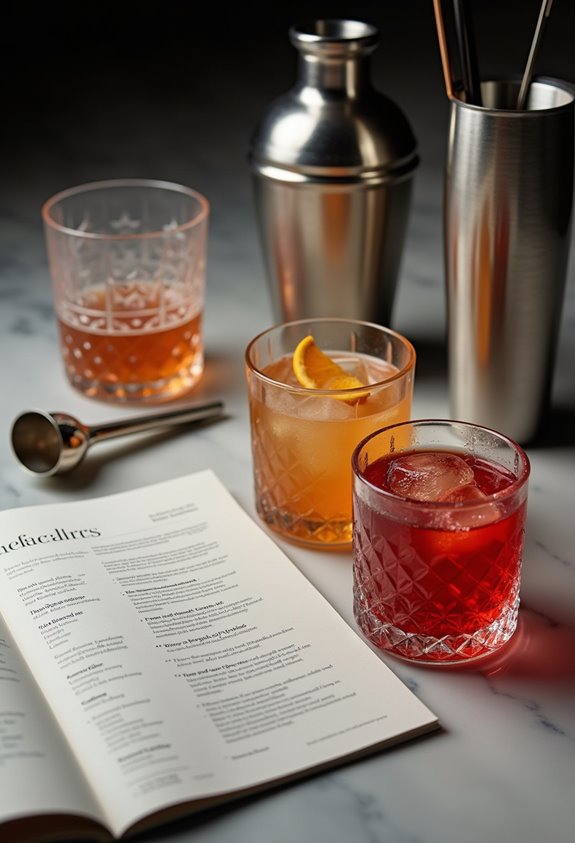
To learn cocktail terminology effectively, individuals should engage in immersive experiences like bartending and mixology courses. Structured education provides a foundation for understanding classic and modern terms. Utilizing multimedia resources, including video tutorials and interactive apps, enhances learning through visual and practical engagement. Memory aids, such as mnemonic devices and thematic grouping, help in recalling terms. Networking with fellow bartenders at industry events further enriches knowledge and facilitates the exploration of new trends within the cocktail landscape.
Key Takeaways
- Engage in immersive hands-on experiences by shadowing bartenders and practicing cocktail preparation to internalize terminology effectively.
- Attend structured bartending or mixology courses that provide comprehensive frameworks and practical applications for mastering cocktail knowledge.
- Utilize multimedia resources like video tutorials and interactive apps for visual aids and step-by-step instructions in cocktail preparation.
- Employ memory aids and thematic grouping to enhance recall of cocktail terms and ingredients through organized learning techniques.
- Participate in community workshops and industry events to connect terminology with real product experiences and expand your network.
Immersion in Bartender Lingo and Terminology
Immersion in bartender lingo and terminology is essential for those seeking to enhance their cocktail knowledge. Observing skilled bartenders in action fosters auditory learning, allowing newcomers to grasp the contextual usage of terms and the evolution of bar slang. Engaging with bartender interactions and customer orders reveals commonly used phrases, while noting non-verbal cues can clarify practical meanings. Role-playing scenarios provide a platform to practice vocal commands such as “muddle” or “float,” reinforcing fluency in realistic settings. The incorporation of multimedia resources, like video tutorials, further enriches the learning experience. Frequent exposure to diverse bar environments offers insight into slang variation and builds confidence, helping individuals fully integrate into the vibrant world of bartending. Understanding the importance of bitters in cocktails can also enhance one’s knowledge of flavor profiles and cocktail construction.
Consult Comprehensive Mixology Guides and Dictionaries

Consulting thorough mixology guides and dictionaries greatly enhances one’s understanding of cocktail terminology. These extensive glossaries consolidate key bartender and cocktail terms, covering ingredients, tools, and techniques essential for learners and professionals alike. Alphabetically arranged entries allow quick access to terms like “bitters” and “curacao,” while definitions clarify distinctions among various flavoring agents. Many guides include regional differences in meaning, ensuring that terminology remains current with relevant updates. Detailed explanations of preparation techniques, such as “muddling” and “swizzling,” also provide valuable insights. By using these resources, aspiring mixologists can cultivate a strong foundation in cocktail lingo, fostering a sense of belonging in the vibrant world of mixology. Additionally, understanding the significance of high-quality ingredients can help in grasping the impact of terminology on cocktail creation.
Hands-On Practice and Bartending Experience
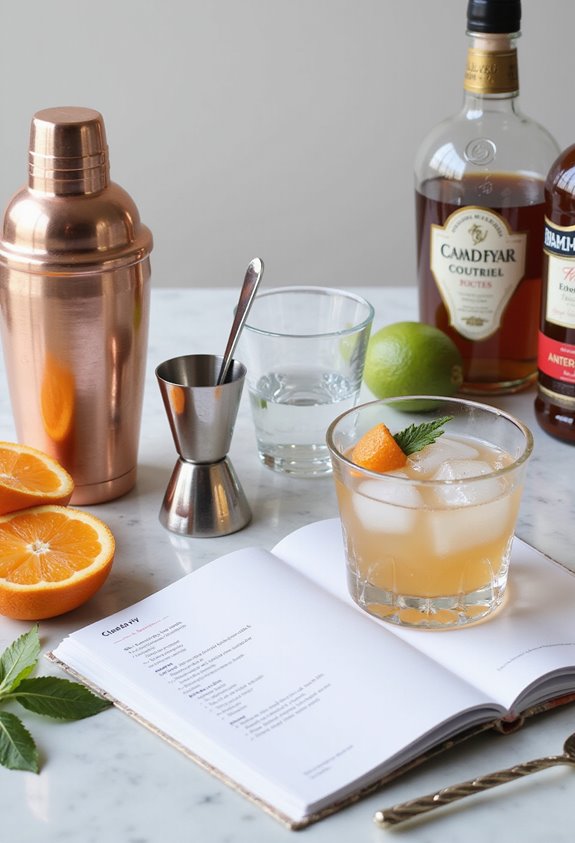
Hands-on practice and bartending experience offer invaluable opportunities for developing proficiency in cocktail terminology. Engaging directly in cocktail preparation allows individuals to internalize terminology through practical techniques and real-time usage. For instance, mastering tasks like building, shaking, and layering reinforces the understanding of key terms. Exposure to customer interactions in busy service scenarios further deepens this knowledge. Learning to decode requests for drinks served “neat” or “on the rocks” enhances listening and communication skills. Shadowing experienced bartenders enables newcomers to observe industry jargon in context. Engaging in live exchanges solidifies the habitual use of correct terms while managing multiple drink orders under pressure reinforces quick recognition of mixology language. Ultimately, experience behind the bar fosters a thorough grasp of cocktail terminology, especially when utilizing essential tools from high-grade stainless steel bartender kits.
Structured Learning via Bartending or Mixology Courses

Structured learning through bartending or mixology courses provides individuals with a thorough framework for mastering cocktail terminology. These courses often combine theory and practical applications, ensuring a balanced educational experience. Course formats range from short workshops to longer foundational programs, adapting to various learning paces. The curriculum depth frequently covers classic and modern cocktails, including training on spirits, mixers, and garnish terminology. Participants also engage in hands-on practice, with up to 80% of the coursework focused on real-world bartending scenarios. Additionally, some programs offer modules on bar equipment vocabulary and responsible alcohol service, promoting both competence and professionalism. Certification alumni often find enhanced job prospects, validating their knowledge of cocktail terminology in the hospitality industry. Furthermore, many courses provide insights into essential bar tools, which are crucial for effective cocktail preparation.
Use Mnemonics and Thematic Grouping for Memorization
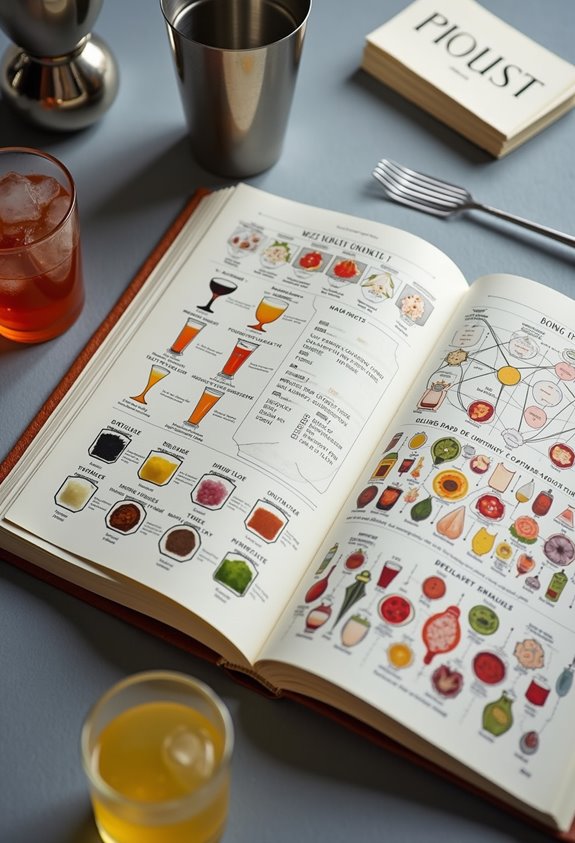
Utilizing mnemonics and thematic grouping can greatly enhance the memorization of cocktail terminology. Mnemonic devices, such as catchy phrases, can aid in remembering ingredients or cocktail terms. For example, “Very Classy Liquor Choice” helps recall Vodka, Cointreau, Lime Juice, and Cranberry in a Cosmopolitan. Thematic grouping organizes terms by categories like spirits or garnishes, creating logical clusters that boost recall speed. This method reduces cognitive load and helps users contextualize usage. Additionally, incorporating imagery alongside mnemonic phrases can strengthen memory by engaging multiple senses. Regular practice with these memory techniques fosters retention and encourages quick retrieval of cocktail knowledge, making it invaluable for both novice and seasoned bartenders alike. These techniques can also be applied when learning about essential cocktail tools that are often included in bar kits, enhancing both practical skills and terminology.
Engaging With Mixology Communities and Media
Engaging with mixology communities and media has become an essential strategy for learning cocktail terminology, as bartenders seek to enhance their knowledge and skills. Online engagement in forums, such as the Straight Bourbon Forum, offers rich discussions on terminology evolution. Community feedback is pivotal for clarifying nuances and fostering deeper understanding. Social media platforms, like Instagram and TikTok, leverage hashtags to spotlight industry insights and cocktail storytelling. These platforms provide immersive experiences with video tutorials and trending terms. Synchronous learning opportunities, such as webinars and live chats, enable real-time clarification of complex terminology, enhancing comprehension during dynamic exchanges. By participating in these digital networks, aspiring mixologists gain expert insights vital for refining their craft, including an understanding of premium ingredients that can elevate their cocktail creations.
Exploring Classic Cocktail Recipes
Classic cocktail recipes serve as a foundational aspect of mixology, reflecting both tradition and craftsmanship. These iconic drinks, such as the Negroni, Old Fashioned, and Sidecar, exemplify the art of flavor balance through specific spirit components. Mixing techniques, including muddling and shaking, are essential in achieving the perfect taste profile. Historical significance adds another layer, connecting enthusiasts to a rich past. Recipe variations, like the New York Sour with its red wine float, showcase creativity while honoring classic roots. Cocktail presentation, enhanced by iconic garnishes, elevates the overall experience. Engaging with these recipes not only fosters a sense of belonging within the cocktail community but also promotes appreciation for the craft of mixology as a whole.
Shadowing Experienced Bartenders
Shadowing experienced bartenders offers a unique opportunity for aspiring mixologists to acquire essential knowledge and improve their understanding of cocktail terminology. By selecting mentors with strong bartender expertise, individuals can utilize effective shadowing techniques. Observing real-time applications of cocktail terminology reveals key nonverbal communication and specific jargon used in various settings. Active mentor engagement facilitates valuable discussions, allowing learners to note important terminology changes in the industry. These interactions create enriching learning environments, fostering networking opportunities among staff. In addition, feedback mechanisms during practice enhance familiarity with terminology applications in a practical context. This immersive approach not only builds foundational knowledge but also connects shadowing experiences to everyday bar culture, ensuring a thorough understanding of mixology.
Regular Participation in Mixology Workshops
Regular participation in mixology workshops serves as a valuable complement to shadowing experienced bartenders. These workshops offer hands-on learning, allowing participants to practice essential techniques like shaking, stirring, and garnishing. Instructors provide immediate feedback, helping learners master cocktail terminology and methods efficiently. Workshops also emphasize flavor balancing, educating participants about the interaction of various spirits and mixers. This knowledge enhances one’s ability to create innovative cocktail pairings and articulate tastes accurately. Additionally, engaging with peers fosters a sense of community, enriching the overall learning experience. By connecting with professional mixologists, participants gain industry insights and broaden their network, paving the way for career advancement and collaborative learning opportunities in the mixology field.
Utilizing Interactive Bartending Apps
As technology continues to enhance learning experiences, interactive bartending apps have emerged as essential tools for mastering cocktail terminology. These apps offer a wealth of app features, including thousands of recipes, ingredient recognition, and personalized cocktail suggestions based on available ingredients. Users can access learning paths that encompass gamified learning and recipe customization, making the process enjoyable and efficient. Real-time feedback further enriches the experience, as step-by-step instructions help users grasp terms effectively. Visual aids, such as photos for each cocktail, reinforce term recognition. Additionally, community engagement through user feedback promotes deeper discussions about terminology in context. Overall, these apps provide a flexible, engaging platform for anyone keen to learn and expand their cocktail vocabulary.
Watching Online Tutorials and Demonstrations
With the advancement of digital resources, watching online tutorials and demonstrations has become a popular method for learning cocktail terminology. These platforms, such as YouTube, offer accessible video content featuring visual aids and engaging demonstrations that considerably enhance understanding. Learners can explore various topics at their own pace, revisiting complex terms when necessary. Many tutorials utilize interactive features like quizzes and live feedback mechanisms, allowing for real-time engagement. Additionally, step-by-step videos provide a complexity breakdown of bartending techniques, fostering muscle memory. This visual learning approach, often produced by certified mixologists, guarantees that viewers receive authoritative content while connecting terminology to practical applications. Overall, online tutorials serve as a valuable resource for anyone enthusiastic to master cocktail terminology.
Attending Industry Tastings and Events
Attending industry tastings and events serves as a dynamic method for learners to deepen their understanding of cocktail terminology. These immersive experiences create opportunities for sensory exploration, linking terms with real-time product engagement. Participants gain industry insights from professionals who provide contextual learning during product demonstrations. Exposure to diverse spirits broadens vocabulary and highlights terminology distinctions unique to each category. Structured events include guided sessions that systematically introduce terminology alongside tasting notes. Peer discussions further enhance comprehension, inviting questions and clarifications. Additionally, cultural exposure to various brands helps enrich understanding by familiarizing learners with the branding impact of specific terms. As a result, attendees experience significant vocabulary expansion while enjoying a collaborative learning environment.
Networking With Fellow Bartenders
Networking among fellow bartenders offers a practical avenue for enhancing understanding of cocktail terminology. Engaging in peer collaboration within the workplace fosters knowledge sharing. Building rapport with coworkers, including barbacks and servers, creates a supportive team environment that encourages communication strategies. Informal meetups during shifts provide opportunities for bartenders to discuss techniques, drink names, and industry lingo while preparing cocktails. Additionally, attending networking events and industry gatherings enables bartenders to connect with experienced professionals who may offer mentorship opportunities. By exchanging business cards at such events, bartenders can maintain valuable relationships. Through these connections, bartenders not only acquire essential terminology but also cultivate a network that supports their growth within the industry.
Keeping a Cocktail Journal
Keeping a cocktail journal is a strategic practice for bartenders who aspire to deepen their knowledge of mixology terminology. This personalized reference allows bartenders to document cocktail terms and their meanings, fostering understanding through direct association with recipes. By employing structured sections for tools, spirits, techniques, and garnishes, professionals can enhance their terminology tracking. Regular journal reflection helps solidify learning while enabling the recording of terminology evolution. Immediate notation of new terms and their contexts enhances retention. Additionally, incorporating images or diagrams enriches comprehension and visual recall. By consistently updating and reviewing their journals, bartenders can create a reliable resource that supports their ongoing growth in the craft of mixology.
Continuous Learning and Adaptation to Trends
In the dynamic world of mixology, continuous learning and adaptation to emerging trends are critical for success. As agave spirits rise in popularity, bartenders must familiarize themselves with diverse flavor profiles, including savory elements like miso and chili. The trend towards hyper-locality encourages the use of regional ingredients, fostering sustainability. Functional cocktails that incorporate superfoods such as turmeric and CBD are gaining traction, reflecting a shift towards wellness. Additionally, low and no-ABV cocktails appeal to conscious drinkers. As these trends evolve, professionals will need to update their knowledge of terminology related to sourcing and preparation methods. Engaging in educational experiences and monitoring new techniques will guarantee mixologists remain relevant in this fast-paced industry.
Frequently Asked Questions
How Can I Practice Cocktail Terminology Alone at Home?
Practicing cocktail terminology alone at home can be achieved by reviewing cocktail recipes, utilizing mixing techniques through repetition, and creating flashcards to enhance understanding, fostering a sense of belonging within the vibrant world of mixology.
What Are the Most Common Mistakes in Learning Cocktail Terms?
Common pitfalls in learning cocktail terms include terminology confusion, improper application of techniques, and overlooking foundational knowledge. These mistakes hinder effective communication and precision, ultimately affecting both drink quality and the joy of mixology.
How Do I Deal With Confusing Terminology Between Different Cocktail Styles?
To navigate style differences in cocktail terminology, one can utilize terminology resources, such as glossaries and reference guides, seek clarification from knowledgeable peers, and actively engage in practical learning experiences for better understanding and connection.
Is There a Specific Order to Learn Cocktail Terminology?
Learning cocktail terminology unfolds like a well-crafted cocktail, starting with core spirits and drink categories, then immersing in terminology resources for clear understanding, gradually layering knowledge to create a rich, flavorful expertise in mixology.
How Often Should I Refresh My Cocktail Terminology Knowledge?
Frequent updates to cocktail terminology are essential for mastery. Engaging in regular terminology quizzes not only reinforces knowledge but also fosters a sense of belonging within the vibrant mixology community, enhancing both confidence and competence.