As an Amazon Associate, we earn from qualifying purchases. Some links on this site are affiliate links at no extra cost to you. Our recommendations are based on thorough research and editorial judgment.

How To Make Syrups And Tinctures For Craft Cocktails?

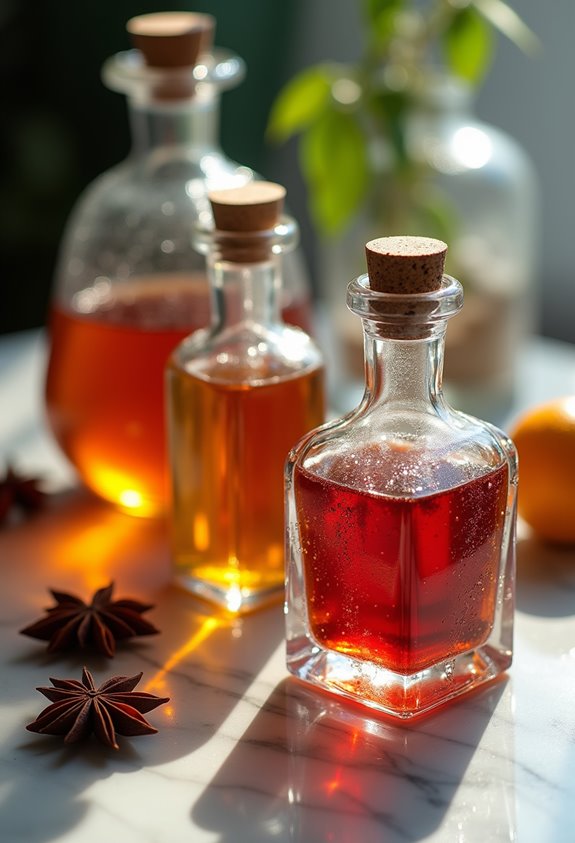
To craft syrups and tinctures for cocktails, utilize a basic ratio of 1:1 sugar to water for syrups. Choose sugars like granulated or demerara for various flavor profiles. Honey syrup can be made with equal parts honey and water. For tinctures, steep botanicals in high-proof alcohol for 2-6 weeks. Maintain clarity using proper straining techniques. With careful storage and quality control, these ingredients enrich cocktails considerably, offering complex and appealing flavors sure to enhance any drink. Further exploration reveals more techniques.
Key Takeaways
- Create syrups by blending equal parts water and sugar, then incorporate fresh ingredients for unique flavors through heating or steeping methods.
- For fruit-based syrups, use a standard ratio of 1 part water, 1 part sugar, and 2 parts fruit, mashing before heating for depth.
- Use high-proof spirits (40-70% ABV) for tinctures, steeping botanicals for 2-6 weeks while shaking regularly to enhance extraction.
- Store syrups and tinctures in sterile glass containers, refrigerate them, and label with production dates for quality control and preservation.
- Incorporate syrups and tinctures in cocktails to balance sweetness and acidity, elevating the overall flavor profile and enhancing the drinking experience.
Understanding Basic Syrup Principles
Understanding the basic principles of syrup preparation involves recognizing key components such as composition, flavor extraction methods, and functional roles in beverages. A standard simple syrup uses a 1:1 sugar-to-water ratio by weight, while rich simple syrup employs a 2:1 ratio, resulting in increased syrup viscosity. Flavor extraction is achieved through heating or cold infusion techniques, allowing ingredients like herbs and fruits to impart their essence into the syrup. This process often employs fresh, organic materials to enhance flavor profiles. Straining is essential for removing solids, ensuring clarity. Ultimately, syrups serve to balance and elevate cocktails by providing sweetness and delivering complex flavors, contributing noticeably to the overall drinking experience in various beverage applications. Additionally, using aromatic bitters in conjunction with syrups can enhance the flavor complexity of craft cocktails.
Types of Sugars for Syrup Preparation
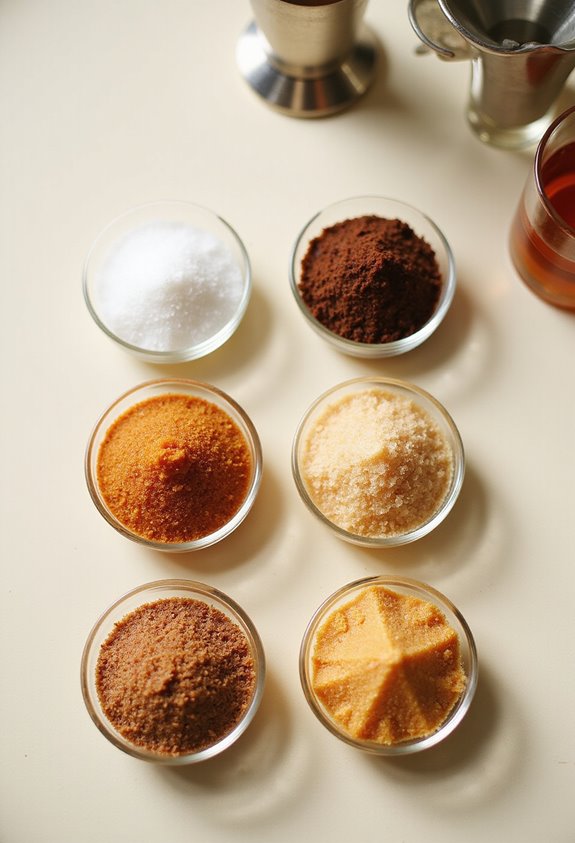
Syrup preparation relies heavily on the type of sugar used, each offering distinct flavors and properties that impact the final product. Granulated white sugar is commonly favored for its neutral sweetness, allowing for a bright syrup suitable for light spirits. Demerara sugar, with its molasses notes, enriches cocktails like Old Fashioneds, enhancing syrup viscosity for aged spirits. Meanwhile, muscovado sugar introduces complex flavors, often paired with non-traditional liquids to create bold profiles. Invert sugar stabilizes syrups with improved shelf life and texture. Specialty sugars, such as agave and turbinado, provide unique sweetness and aroma options, requiring careful adjustment of syrup ratios. Each sugar type broadens syrup applications, catering to diverse cocktail pairings and enhancing overall drinking experiences. Using high-quality ingredients in your syrups will ensure a more flavorful and satisfying cocktail experience.
Recommended Products

White Sugar Substitute: Perfect replacement for traditional white sugar, offering the same sweetness without the calories.

Earthborn Elements Granulated White Sugar in a resealable bucket

ORGANIC CANE SUGAR - Certified Organic and made in green cut fields, our cane sugar is naturally sweet and will enhance any dish you put it in
Creating Honey Syrup
Creating Honey Syrup
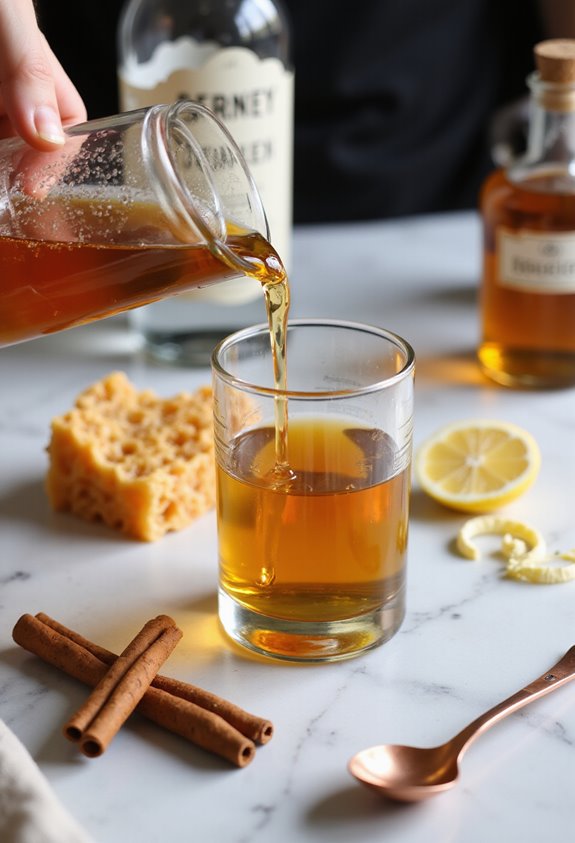
Incorporating honey syrup into beverage recipes adds a distinct flavor profile that distinguishes it from traditional simple syrups. To create honey syrup, mix equal parts honey and water, achieving a pourable liquid ideal for cocktails. The syrup’s texture improves pourability and blendability, especially in cold drinks. Various honey varieties, from mild to floral, can enhance the syrup’s unique characteristics, allowing mixologists to customize cocktail profiles. Several preparation techniques exist, such as gentle heating or a no-heat method, aimed at preserving honey’s beneficial enzymes. Refrigeration is crucial post-preparation to minimize microbial growth, extending the syrup’s shelf life to about one month. Proper storage in clean glass containers guarantees flavor integrity and freshness for future use. Additionally, using high-quality ingredients, like gluten-free and non-GMO honey, can further elevate the overall cocktail experience.
Recommended Products

Decadent Italian Flavor: Premium balsamic vinegar of Modena with notes of plum jam, red fruit, honey, and vanilla; thick texture; gourmet food; mature balance and depth

QUALITY & PURITY: 99% pure ginger juice with no sugar or water added. The most convenient way to get ginger into your daily routine. A potent juice made from fresh ginger.

Made from real ginger juice and honey: Crafted for a bar-quality, spicy-sweet profile used in both modern and classic cocktails
Methods for Herbal Cocktail Syrups
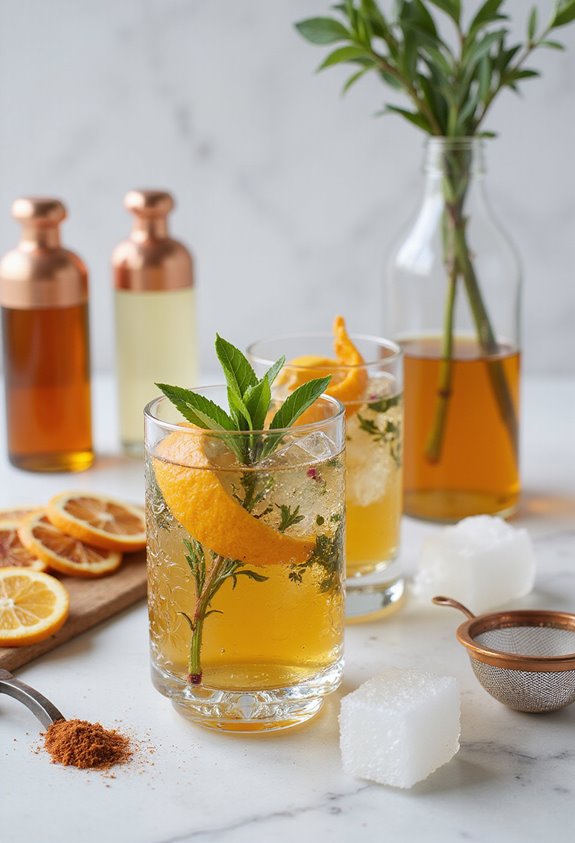
Creating herbal cocktail syrups offers mixologists a versatile tool to enhance their beverage creations with distinctive flavors. There are two primary infusion techniques: the heated syrup method and the long steeped method. The heated method involves boiling water and sugar, adding herbs like woody rosemary, simmering briefly, and cooling. In contrast, the long steeped method uses warm water to dissolve sugar before pouring over delicate herbs like mint and basil, allowing them to steep without boiling. For ideal flavor extraction, herb combinations can vary, with a common ratio of 1:1 water to sugar. Experimentation with combinations and infusions can yield unique syrups, mandating careful temperature control to preserve the freshness and subtlety of delicate herbs. Using high-quality ingredients is essential for creating natural sweetness in your syrups, which enhances the overall flavor profile of your cocktails.
Recommended Products

VERSATILE FLAVOR: Our beverage infusions are perfect for flavoring waters, hot teas, iced teas, seltzers, cocktails, mocktails, lemonades, sodas, sangrias, champagnes, and more.

DEBUTED IN 2015, SEEDLIP IS THE ORIGINAL PREMIUM NON-ALCOHOLIC SPIRIT: Seedlip has created Non alcoholic Spirits with incredible and distinct flavors. If you're moderating or looking for a sophisticated alternative to alcohol -- to enjoy yourself or serve to guests -- Seedlip is for you.

100% PURE Coconut Nectar: Sustainably hand-harvested using ancient techniques. Each drop is carefully collected from the coconut blossom to preserve its authentic flavor and natural nutrients.
Popular Herbs for Syrups
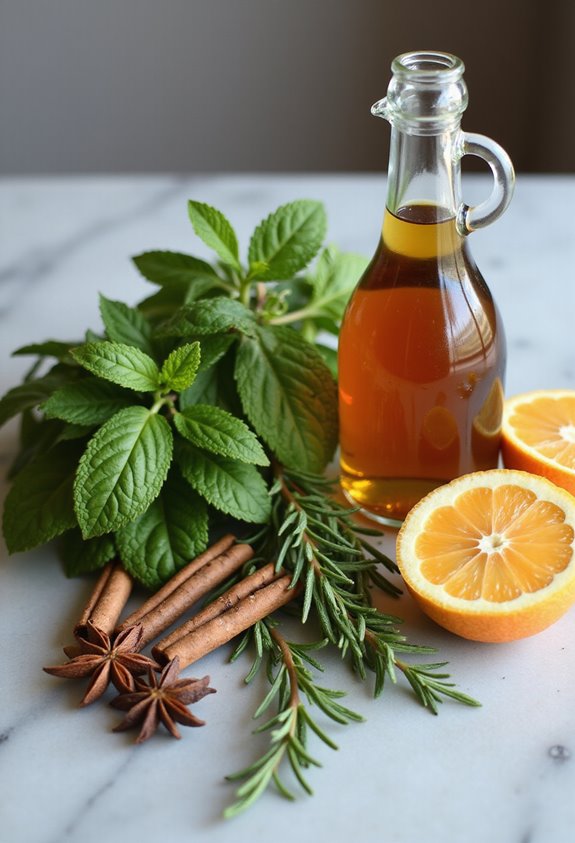
Herbs play an essential role in the development of flavorful syrups used in cocktails and other beverages. When considering herb selection, popular choices include mint, basil, lavender, and rosemary. Mint is known for its invigorating flavor, while basil provides subtle peppery notes. Lavender adds floral complexity, and rosemary introduces an earthy depth. Additionally, thyme, sage, and chamomile contribute unique profiles that enhance syrup flavor combinations. Thyme’s herbal citrus notes and sage’s peppery taste work well in various drinks. Significantly, cardamom enhances fruit syrups with warm, spicy undertones. Combining herbs like lavender, mint, and rosemary can create multilayered flavors that elevate cocktails. These herb selections not only deepen taste but also foster a sense of community among cocktail enthusiasts. Moreover, mastering measurements can help ensure that your syrups are precisely crafted for the best flavor balance in your cocktails.
Crafting Fruit-Based and Specialty Syrups
Crafting fruit-based and specialty syrups represents a valuable skill in the beverage industry, enhancing cocktails and non-alcoholic options alike. Successful syrup variations are often achieved by utilizing fresh, seasonal ingredients. A standard ratio for creating a robust flavor is 1 part water, 1 part sugar, and 2 parts fruit. Artisan techniques include mashing fruit before heating to maximize extraction and gently simmering to avoid overcooking. Whole spices like cardamom can be added for additional depth. Mixed berry syrups, featuring various berries, offer versatile uses in both cocktails and mocktails. Storing these syrups in airtight containers will preserve their vibrant fruit flavors, contributing to delightful drink experiences that resonate with those seeking a strong sense of community. Incorporating natural ingredients into your syrup-making process can enhance flavor quality and reduce artificial aftertaste.
Recommended Products

CONVENIENT:- Our Grab-n-Go Bucket offers flexibility and convenience, with meals that are ready at a moment’s notice. This kit contains 10 pouches providing 80 servings of high-quality food. Light and easy to carry or store, it is ideal for any adventure. At NuManna, you don’t overpay for oatmeal and sugary drinks. Instead, our Grab-n-Go Bucket delivers 70 servings of gourmet lunches and dinners and 10 servings of breakfast, offering the lowest breakfast ratio in the industry.
❄️ THE LITTLE SNOWIE MAX: Modeled after Snowie’s unstoppable commercial shavers but affordably priced for the home, office, backyard pool, whatever the destination; Little Snowie Max is ready to impress and is the fastest, most impressive home ice shaver in the world. People travel to Hawaii for the quality of shaved ice, which you can now create in your own home from this mini powerhouse. Its sleek design is visually pleasing while sophisticated & functional.
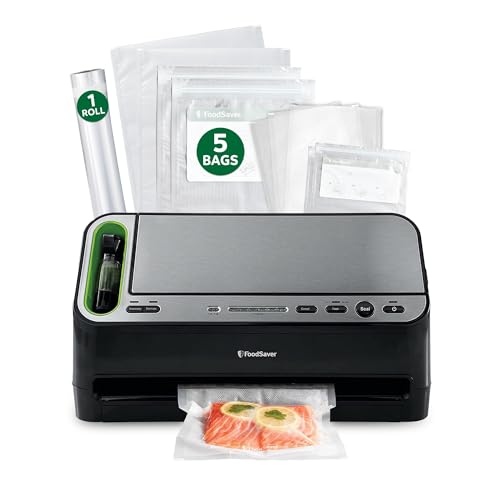
SAVE MONEY AND SEAL FRESHNESS IN: MEAT PRESERVED WITH THE FOODSAVER SYSTEM IN THE FREEZER CAN LAST UP TO 3 YEARS AND STILL TASTE FRESH, FLAVORFUL, AND FREEZER BURN FREE; PREP AHEAD MEALS, LEFTOVERS, AND PRODUCE STORED IN THE FRIDGE WILL STAY FRESH UP TO WEEKS LATER INSTEAD OF SPOILING IN DAYS.Includes: (1) 11""x10' vacuum seal roll (3) 1-quart vacuum seal bags (2) 1-gallon vacuum seal bags (3) 1-quart vacuum zipper bags (2) 1-gallon zipper bags
Grenadine: A Classic Syrup Recipe
Grenadine syrup, a staple in both classic and contemporary mixology, is primarily made from pomegranate juice, sugar, and a splash of fresh lemon juice. This syrup is known for its vibrant color and balanced flavor, making it a popular ingredient in cocktails like the Tequila Sunrise and Shirley Temple. Grenadine uses extend beyond cocktails, as it also enhances non-alcoholic beverages. Various grenadine variations exist, including those that incorporate pomegranate molasses for added depth or orange blossom water for floral notes. To prepare, mix pomegranate juice, sugar, and lemon juice over medium heat until dissolved. After a brief simmer, cool before bottling. Proper storage guarantees the syrup remains fresh, typically lasting up to one month in the refrigerator.
Making Maple Syrup for Seasonal Cocktails
As the seasons change, many mixologists turn to maple syrup to add depth and warmth to their cocktail creations. This rich syrup enhances classic cocktails like the Old Fashioned and Sour. By employing maple infusion techniques, bartenders can create variations that pair beautifully with whiskey, bourbon, rum, and gin. The syrup’s earthy sweetness balances well with citrus juices, providing a duality of flavor through seasonal flavor enhancements. For ideal results, mix 1/2 oz to 1/2 tsp of maple syrup per drink, shaking it with the spirit, citrus, and ice. Additionally, garnishing with herbs such as rosemary can elevate the drink, introducing layered flavors and pleasing aromas that embody the essence of fall and winter cocktails.
Recommended Products
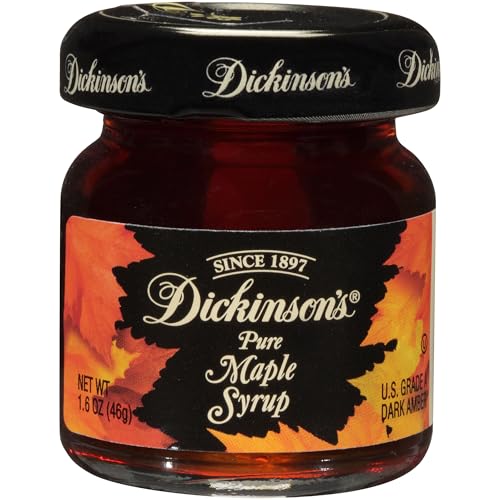
Contains 72 pieces of 1.6 oz Dickinson's Pure Maple Syrup

PRODUCED IN DUTCHESS COUNTY, NY: Crown Maple organic, pure maple syrup provides a rich, medium-body feel and luxurious flavors of gingerbread, roasted chestnut, toffee and a hint of clove and nutmeg; 25 fl Oz

CONTAINS ORGANIC CINNAMON STICK: Cinnamon Infused organic maple syrup with cinnamon stick infused flavor in our select quality maple syrup; Add warmth to coffee, tea, desserts, oatmeal and more; 25 fl Oz
Exploring Tincture Making
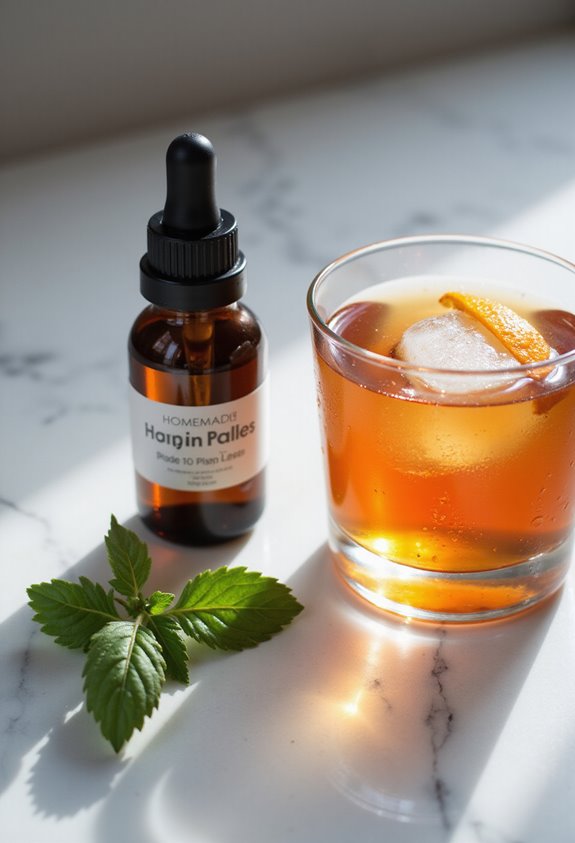
Tincture making is increasingly recognized as a valuable technique in the domain of mixology, offering bartenders a method for intensifying flavors in cocktails. Tinctures are concentrated herbal extracts created with alcohol, usually ranging from 40% to 70% ABV, to extract and preserve the active ingredients of various botanicals. These shelf-stable solutions allow for easy dosage control, typically administered in drops. Bartenders often use single-flavor tinctures to achieve specific notes without overwhelming the drink’s complexity. The tincture-making process involves steeping botanicals for 2-6 weeks, regularly shaking the mixture to enhance extraction. Proper straining and storage in amber bottles help maintain flavor integrity while increasing the tincture shelf life. Overall, tinctures offer a versatile addition to any cocktail enthusiast’s toolkit.
Applications of Syrups in Craft Cocktails
In the world of craft cocktails, syrups serve as essential tools for elevating drink experiences through flavor enhancement and texture improvement. Syrup flavoring introduces depth and complexity, transforming cocktails with unique taste elements like vanilla or citrus. This customization allows bartenders to create drinks catering to diverse palates, ensuring cocktail balance between acidity and sweetness. The smooth, velvety texture provided by syrups enhances mouthfeel, contributing to a luxurious drinking experience. Additionally, the quick-dissolving nature of syrups streamlines cocktail preparation, offering efficiency in busy settings. Versatile in application, syrups can be used in both alcoholic and non-alcoholic beverages, reinforcing their place in modern mixology. Ultimately, syrups are a cornerstone of innovative cocktail craftsmanship.
Using Tinctures for Enhanced Flavor
Craft cocktail enthusiasts increasingly employ tinctures to enhance the flavor profiles of their creations. Tincture varieties extract flavors from botanicals using high-proof spirits, allowing for effective flavor manipulation without altering the cocktail’s texture. With just a few drops, mixologists can introduce powerful flavors, like rosemary or citrus peel, to elevate classic cocktails such as the Negroni or whiskey sour. Tinctures serve to amplify specific notes while maintaining balance and clarity, acting as a seasoning much like salt does in cooking. This versatility has made them essential tools in craft cocktail circles, enabling precise control over flavor intensity and layering. By integrating tinctures, bartenders can refine their drinks, creating unique and sophisticated flavor experiences.
Storage and Quality Control for Syrups and Tinctures
Proper storage and quality control are essential for preserving the integrity of syrups and tinctures, especially given their sensitivity to environmental factors. Ideal syrup storage involves using glass jars or bottles, as they prevent flavor contamination from plastics. Refrigeration is vital to inhibit microbial growth, particularly for standard simple syrups, which spoil quickly at room temperature. Maintaining proper quality monitoring includes labeling syrups with production dates and conducting regular sensory checks to assess flavor and appearance. Additionally, utilizing preservatives like sodium benzoate helps prolong shelf life when applied correctly. For best results, it is advisable to strain syrups thoroughly and maintain clean utensils to minimize contamination during bottling and use, ensuring a delightful crafting experience.
Frequently Asked Questions
Can I Use Artificial Sweeteners for Syrup Preparation?
Yes, artificial sweeteners serve as effective syrup alternatives, allowing a low-calorie option for various recipes. Blending different sweeteners can enhance taste, satisfying those seeking a flavorful yet health-conscious choice in their beverages.
How Do I Adjust Syrup Sweetness for Specific Cocktails?
To harmonize sweetness in cocktails, one must master syrup flavoring techniques, gently adjusting ratios through careful tasting. Dilution methods further enhance balance, guiding the palate to embrace each nuanced layer of the drink’s essence.
What Are the Safety Precautions When Making Tinctures?
Safety precautions when making tinctures include using clean equipment, storing tinctures in dark glass bottles to protect potency, and ensuring proper handling to prevent contamination. Regularly reviewing ingredients and consulting professionals enhances safe usage for all.
Can I Combine Different Herbs in One Tincture?
Yes, combining different herbs in one tincture is possible, but careful consideration of herb combinations and tincture potency is essential to achieving balanced flavors and desired effects.
How Can I Infuse Syrups With Spices Effectively?
To effectively infuse syrups with spices, one should explore various spice combinations and infusion techniques. Crushing spices enhances flavor release, while careful timing guarantees a balanced, harmonious sweetness that invites creativity and connection in cocktail crafting.