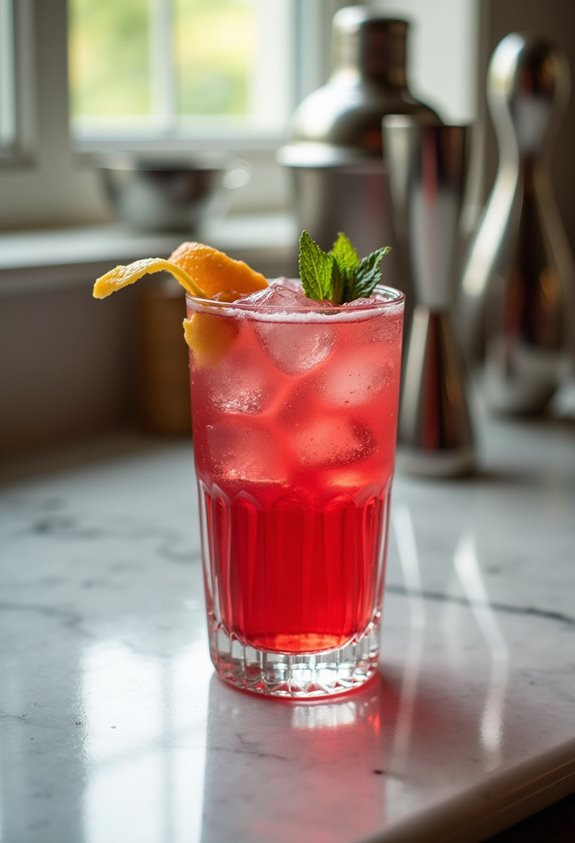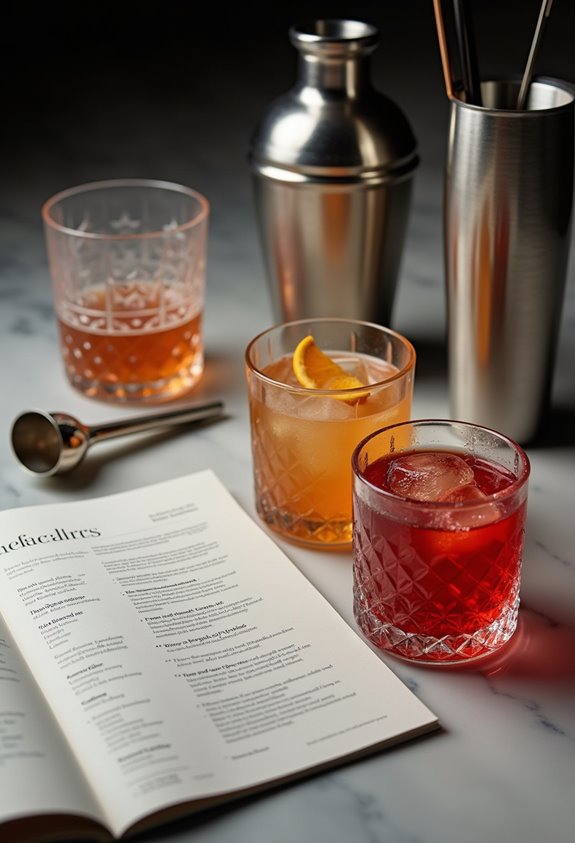
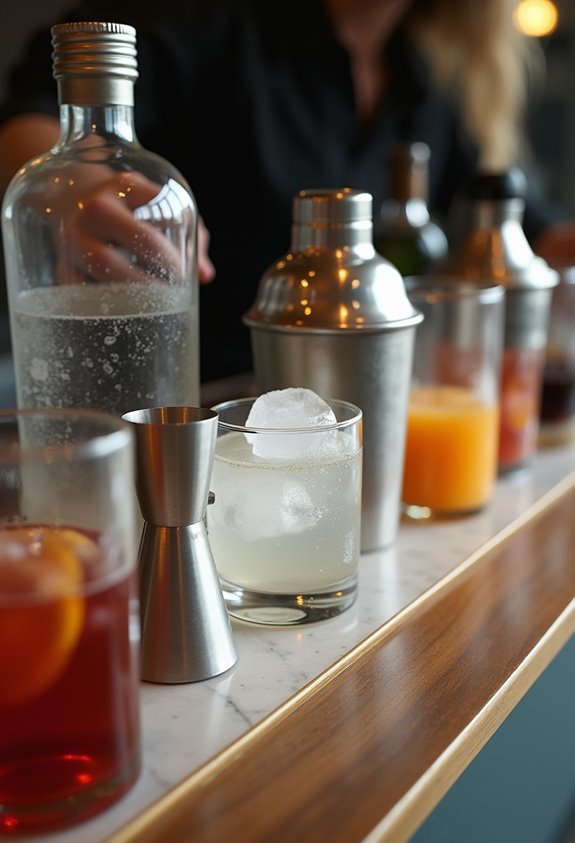

New home bartenders frequently make errors that compromise their cocktails. Common mistakes include improper ice handling, which can contaminate drinks, and inaccurate measurements that affect flavor balance. Neglecting glassware hygiene leads to unsightly residues, while incorrect shaking or stirring techniques alter drink texture. Additionally, overcrowding the bar station and underestimating preparation time disrupt workflow and efficiency. Addressing these issues can greatly enhance cocktail quality and presentation, revealing further insights into effective bartending practices.
Key Takeaways
- Using glassware to scoop ice can lead to contamination; always opt for metal or plastic ice scoops for safe handling.
- Neglecting proper measurement tools often results in inconsistent flavors; use jiggers to ensure accurate ingredient ratios.
- Forgetting to clean glassware correctly can affect presentation and taste; handle glasses by the base to maintain hygiene.
- Confusing shaking and stirring techniques can alter cocktail texture; learn the correct method for each drink type for best results.
- An improperly organized bar station can lead to inefficiencies; maintain a systematic layout to enhance workflow and speed.
Ice Handling Mistakes
Many new home bartenders unknowingly commit ice handling mistakes that can compromise both drink quality and customer safety. A common error is using glassware to scoop ice, which risks contamination and potential glass shards in drinks. Industry experts emphasize the importance of using metal or plastic ice scoops, ensuring ice scoop safety and hygiene. Additionally, maintaining clean ice bins is essential; failure to do so may lead to health hazards and delays in service. Insufficient ice not only affects drink temperature but can also dilute flavors inconsistently. Proper techniques, including avoiding hand-packed ice and using designated utensils, enhance both the taste and visual presentation of cocktails, ultimately influencing customer satisfaction in home bartending. To further improve ice handling, bartenders should consider using bins made of durable materials that meet food safety standards to ensure a safe and enjoyable experience.
Measurement and Pouring Errors
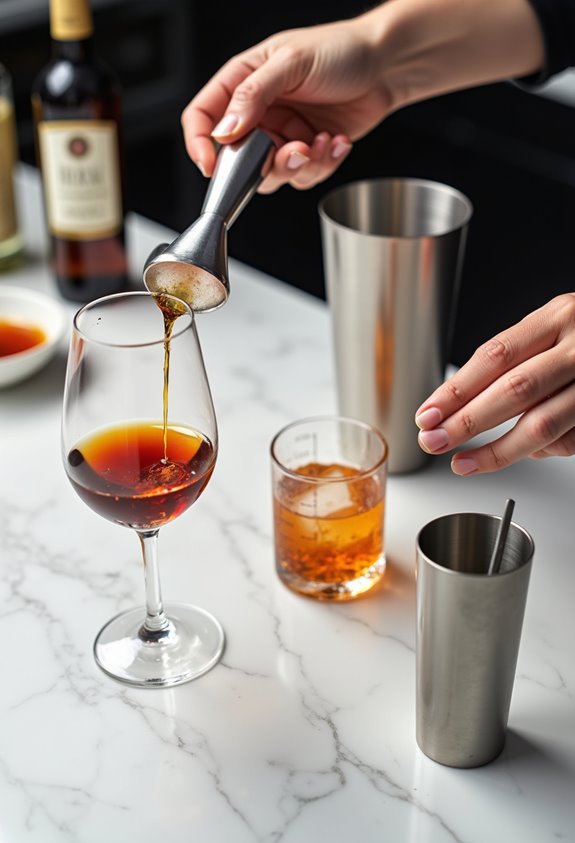
Errors in measurement and pouring are frequently encountered by new home bartenders, impacting both the quality of cocktails and the overall customer experience. Many bartenders neglect to utilize proper measuring tools, such as jiggers or measuring spoons, leading to inconsistencies in ingredient quantities. Additionally, reliance on free pouring often results in overpouring or underpouring, affecting flavor and drink strength. Techniques such as proper pour control and filling jiggers to the designated line enhance accuracy. Small quantities pose another challenge; specialized tools like pipettes may be necessary for precise measurements. Strict recipe adherence is essential for maintaining flavor balance. By refining accuracy techniques and committing to consistent measurement, bartenders can elevate their cocktail-making skills and customer satisfaction. Investing in premium bar tools ensures durability and precision, making it easier to achieve accurate measurements.
Glassware and Presentation Problems
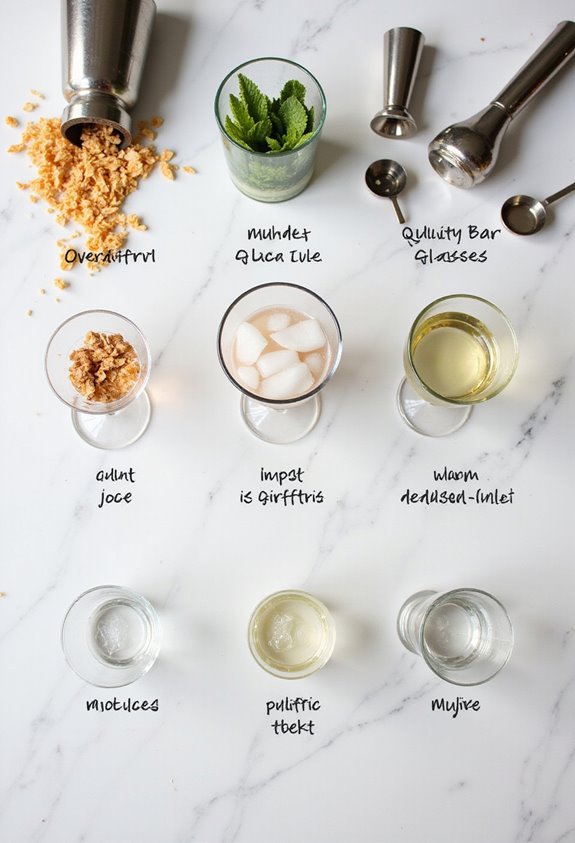
Glassware selection and proper handling are critical elements in the art of bartending, affecting both the cocktail’s integrity and presentation. New home bartenders often overlook glass hygiene, mistakenly handling glasses by their rims, which can compromise cleanliness and drink temperature. Proper polishing is essential; failing to polish may result in detergent residues or lipstick marks, negatively impacting customer perceptions. Additionally, selecting inappropriate glass sizes can lead to misproportioned drinks, while serving in flawed or dirty glassware diminishes aesthetic presentation. To enhance visual appeal and professionalism, bartenders should guarantee their glassware is clear and radiant. Prioritizing correct glass selection, alongside hygienic practices, creates an inviting atmosphere conducive to enjoyable drinking experiences. Choosing high-quality crystal for glassware not only elevates the overall experience but also showcases the beauty of each cocktail served.
Recommended Products

High quality crystal material

Includes: Orrefors Intermezzo Blue 7 oz. Martini Stem, Set of 4

Crafted from the finest crystal
Shaking and Stirring Technique Errors
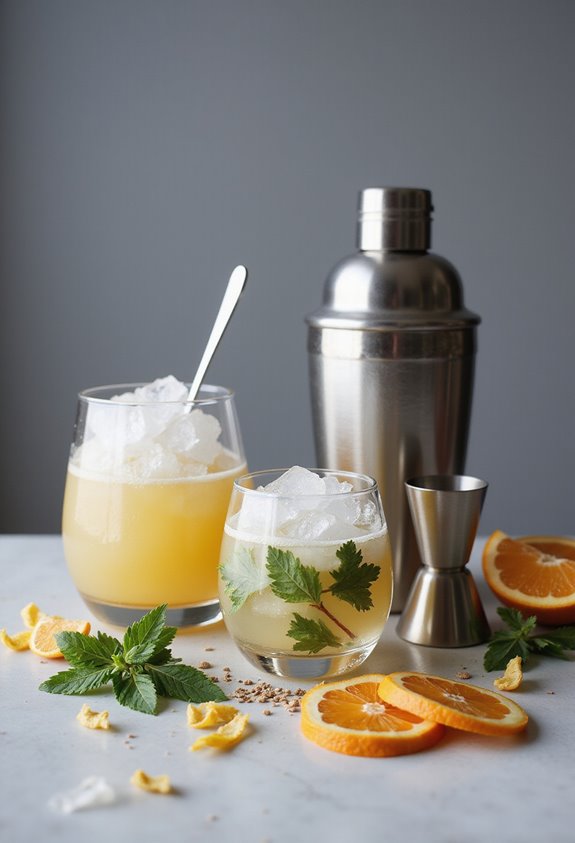
Shaking and stirring techniques are essential in crafting quality cocktails, yet new home bartenders frequently struggle with these vital skills. Common errors include incorrect shaking motions, where vertical techniques limit ice contact with the shaker, leading to inadequate chilling. The preferred method is a horizontal motion for effective agitation. Many bartenders also fail to recognize the importance of shaking duration; a proper shake lasts 10-15 seconds, while excessive shaking results in over-dilution. Additionally, confusion between shaking and stirring methods can alter the drink’s texture. Each cocktail type requires specific techniques for prime results, and using both hands to secure the shaker is important for preventing leaks. Adhering to these principles enhances overall cocktail quality, fostering a sense of belonging among home bartenders. Incorporating essential bar cart accessories can further streamline the mixing process and improve the overall experience.
Speed and Workflow Challenges
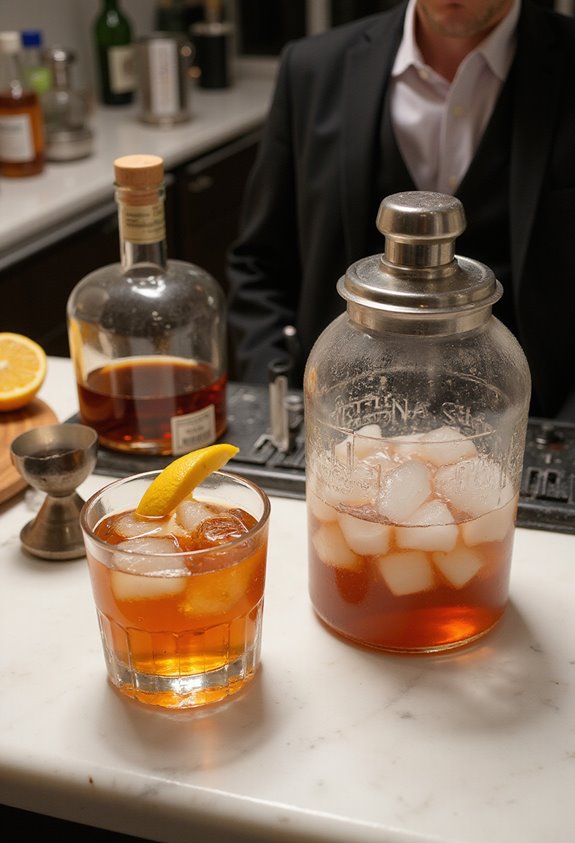
Speed and workflow issues present significant challenges for new home bartenders, impacting their ability to create cocktails efficiently. An improper bar layout often leads to discomfort, with 85% of setups featuring counter heights that hinder movement. Additionally, 68% of spaces lack adequate storage, contributing to clutter and workflow disruption. Poor lighting impairs speed management, affecting 88% of environments. Many bartenders also neglect the use of technology for workflow optimization, as 32% do not utilize digital inventory systems. Experience plays a crucial role, as new bartenders struggle with multitasking and balancing orders. Physical fatigue from inadequate ergonomic support leads to decreased productivity. Addressing these factors can greatly enhance efficiency, allowing new bartenders to thrive in their craft. Utilizing a professional cocktail shaker set can streamline the mixing process and improve overall workflow.
Customer Engagement and Overconfidence
How do new home bartenders navigate the complexities of customer engagement while managing their own confidence? Many struggle with active listening and emotional intelligence, leading to misreading customer preferences. This can reduce both satisfaction and loyalty. With a tendency to dominate conversations, new bartenders may alienate guests who seek quieter interactions. Overconfidence in their skills can exacerbate these issues, causing them to ignore valuable feedback. In fact, 82% of bartenders report feeling pressured to drink with customers, heightening their vulnerability. To enhance customer relationships, bartenders should engage in training that emphasizes active listening, self-awareness, and reflection. By fostering a supportive environment, home bartenders can improve their service quality while building stronger connections with their patrons. Additionally, having access to a well-equipped cocktail-making kit can help boost their confidence and ensure they are prepared to meet diverse customer preferences.
Using Inappropriate Ice Types
New home bartenders often overlook the importance of using appropriate ice types and shapes, which can greatly affect drink quality and customer satisfaction. Using large format ice and clear spherical ice is essential, as these options chill drinks effectively while minimizing dilution. In contrast, smaller or cloudy ice tends to melt faster, which can lead to overly diluted cocktails. For instance, whiskey on the rocks benefits from large cubes that maintain flavor integrity. Although some believe the differences in dilution to be minor, matching ice type to drink style is critical. Moreover, focusing too much on ice perfection can detract from other significant factors, such as flavor balance and presentation, ultimately impacting the overall drinking experience for patrons.
Recommended Products
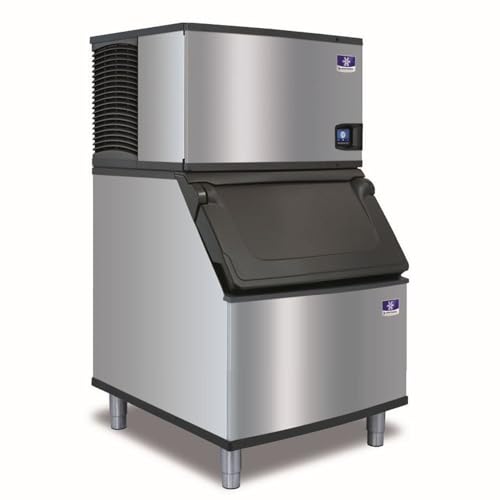
Manitowoc Indigo NXT Series Commercial Ice Maker Machine | Half Cube, 1660 lb/Day with D970 Storage Bin – IYT1500A+D970 Exceptional Ice Storage: Produces up to 1660 lbs of ice per day at 70°F/50°F, AHRI certified for 1412 lbs at 90°F/70°F, with a D970 storage bin for efficient ice organization.

Manitowoc Indigo NXT Series Commercial Ice Maker Machine | Full Cube, 1196 lb/Day, Head Only – IDT1200A Unrivaled Ice Production: Produces up to 1196 lbs of full-cube ice per day at 70°F/50°F, ensuring a reliable supply for busy commercial environments.

Manitowoc Indigo NXT Series Commercial Ice Maker Machine | Half Cube, 1213 lb/Day, Head Only – IYT1200A High Ice Output: Produces up to 1213 lbs of half-cube ice per day at 70°F/50°F, AHRI certified for 950 lbs at 90°F/70°F, ensuring a steady supply for high-demand environments.
Ignoring Glass Hygiene
What are the critical practices that separate a well-run bar from one that jeopardizes customer health? Ignoring glass hygiene presents a significant risk in the home bartending scene. Proper glass storage is essential; glasses should be stored upside down to prevent contamination. Additionally, using mats between stacked glasses can help avoid issues like mold and bacteria buildup. Polishing techniques matter too; unwashed rags can harbor harmful pathogens. Freshly laundered cloths are recommended for polishing, while paper towels can remove detergent residues, improving the drink’s presentation and safety. Bartenders must always inspect glassware for chips or cracks before serving, as compromised glasses can lead to customer injuries and diminish trust in the establishment. Safeguarding glass hygiene is fundamental for guest satisfaction.
Recommended Products

Laser power: 300W, Class1, output power 0.39mW, scanning width: 0-100mm, pulse width: 10-500ns, modulation frequency: 1-3000kHz, 5m cable length, input voltage: AC110-220V±10%, ambient temperature: -5°C-37°C.

CAPACITY: Massive 72 cubic feet of storage space with 9 adjustable heavy-duty PVC coated shelves for maximum storage flexibility

Unmatched Clarity & Modern Design: 55-gallon aquarium with 98.5% ultra-high light transmission polished glass and natural green rock texture base, It adds refined elegance to offices, living rooms, or kitchens
Misjudging Ingredient Ratios
Misjudging ingredient ratios represents a common pitfall for novice home bartenders, often leading to cocktails that lack balance and flavor. New bartenders frequently make ingredient substitutions, which can markedly disrupt the intended flavor profiles of classic cocktails. For instance, using vodka instead of tequila in a margarita removes the essential agave notes, resulting in a flavor imbalance. Many cocktails rely on established ratio guidelines, like the 2:1:1 formula for balance. Ignoring these guidelines can lead to overly sweet or sour drinks. Moreover, inaccurate spirit measurements from estimating pours can mask flavors, necessitating ratio recalibration. Ultimately, recipe adherence is vital; it allows beginners to develop their skills while ensuring enjoyable and consistent cocktail experiences.
Inefficient Bar Setup
An efficient bar setup is essential for delivering high-quality service and drinks in any establishment. New home bartenders often overlook station organization, leading to disorganized workstations that slow service. A cluttered bar requires time-consuming searches for ingredients and tools, hindering workflow optimization. Improper ice handling, such as using glasses instead of designated scoops, risks contamination and further delays drink preparation. Additionally, bartenders may neglect equipment maintenance, resulting in faulty tools and imprecise pours. Implementing a systematic layout for frequently used items allows for less movement and greater efficiency. Streamlining the bar setup not only enhances speed but also fosters better customer experiences and consistent drink quality. Addressing these issues can greatly improve a home bartender’s performance.
Recommended Products

Folding smith machine - Engineered with space in mind can transform from a depth of 54” to as little as 22” in less than 30 seconds, without compromising exercise function.

ELEGANT AESTHETIC - The Kenmore wine cooler sleek black cabinet, combined with a seamless stainless steel door frame & handle, contributes to the sophisticated design of The Kenmore 112 Bottle Slim 18-Inch Wine Cooler. these premium materials enhance durability & complement any decor, making it a stylish addition to any space. the elegant design ensures that the cooler blends seamlessly with various interior styles.

Single lever handle allows for both on/off activation and temperature setting
Failing to Chill Glassware
Chilling glassware is a crucial step in cocktail preparation, yet many new home bartenders overlook its importance. Proper chilling techniques not only maintain a cocktail’s temperature but also enhance the overall drinking experience. Warm glassware leads to faster ice melt, diluting flavors and compromising a drink’s integrity. It is essential to understand various glass types, as thicker options like beer mugs can be pre-chilled without risk. Bartenders should utilize tools like refrigerators or ice-filled glasses for effective chilling, ensuring proper spacing in the freezer to avoid uneven cooling. Failure to chill glasses adequately detracts from professionalism, resulting in a less enjoyable cocktail and a diminished perception of skill at gatherings. Making this simple step a priority can elevate home brewing practices appreciably.
Overcrowding the Bar Station
Maintaining an organized bar station is a significant factor that impacts the efficiency of home bartending. Overcrowding the bar station often results from excessive purchasing of spirits and mixers beyond what is essential. Limited space combined with an expanded cocktail menu creates clutter, making items difficult to access. In addition, a lack of a clear organizational plan leads to random placement, contributing to disarray. To avoid these pitfalls, bartenders should prioritize overcrowding prevention by curating a selection of necessary liquors and mixers. Employing organized storage solutions, such as labeled shelves, guarantees bottles are easily identified and accessible. Regularly auditing stock and removing duplicates can enhance overall efficiency and offer a more inviting space for guests to enjoy and explore.
Recommended Products

Versatile Bar Cart: Whether you're hosting a gathering in the kitchen, dining room, living room, or outdoor BBQ, this bar serving cart is a perfect addition. It features three-tiered shelves, two stemware racks that can hold 12 pieces of glassware, and a wine rack capable of storing up to six bottles of wine. The wrap-around rods ensure that your bar accessories stay securely in place while the cart is in motion.

Generous Dimensions for Your Home: This versatile coffee bar cabinet with storage, measuring a substantial 40.25 inches in width, 14.25 inches in depth, and 33 inches in height, offers an expansive canvas for displaying your cherished spirits, coffee essentials, wine collection, glassware, and home decor. Perfect as a coffee cart station, narrow coffee bar, or small kitchen cabinet for small spaces, it becomes a striking centerpiece in any room.

🍾 48" Single Speed Rail – Holds multiple bottles for streamlined service behind any bar or prep area.
Underestimating Drink Prep Time
Underestimating drink preparation time can greatly hinder the efficiency of home bartenders, especially those who are just starting. Many new bartenders misjudge the time needed for each drink, neglecting that specialty cocktails can take considerably longer to prepare than classic options. For instance, an intricate cocktail might require ten or more ingredients, and individual steps like shaking or stirring add valuable seconds. Ignoring these elements impacts cocktail timing and overall service flow. Additionally, efficient preparation planning, such as batching similar drink steps, streamlines the process. Ultimately, failing to account for accurate measuring and garnishing time leads to delays, reducing product quality. A structured approach to drink prep can enhance the home bartending experience.
Skipping Prep Work for Ingredients
How can skipping the preparation of ingredients greatly impact the quality of cocktails? Neglecting ingredient organization can lead to disorganized and inconsistent drinks. For instance, failing to cut fresh citrus or prepare fresh components like simple syrups diminishes flavor, resulting in artificial-tasting cocktails. Proper tool selection is critical; using inappropriate tools for muddling herbs can bruise them, releasing undesirable bitter notes. Additionally, neglecting garnishing techniques stars a cocktail presentation, as fresh garnishes enhance aroma and visual appeal. Lastly, without proper prep, flavor extraction from fruits and herbs suffers, weakening the drink’s overall complexity. Each step in preparation is essential for ensuring a polished and enjoyable cocktail experience, creating a welcoming atmosphere for both the bartender and guests.
Frequently Asked Questions
How Do I Choose the Right Cocktail Shaker?
Choosing the right cocktail shaker often involves irony; one may seek elegance while overlooking functionality. Shaker types and materials—like stainless steel for durability or cobbler’s convenience—should match the bartender’s style and mixing aspirations for genuine camaraderie.
What Basic Tools Do I Need for Home Bartending?
Essential bar tools for home bartending include cocktail shakers, jiggers, and strainers. Mastering mixing techniques with these tools fosters camaraderie, allowing enthusiasts to create balanced cocktails and share memorable experiences with friends and family.
How Can I Effectively Organize My Bar Space?
Creating an inviting bar space is like composing a symphony; a harmonious bar layout complemented by thoughtful storage solutions guarantees efficiency and elegance, fostering a sense of belonging and enjoyment for all who gather there.
What Are the Essential Garnishes for Cocktails?
Essential garnishes include citrus slices, olives, fresh herbs, and unique touches like edible flowers. Their importance lies in enhancing flavors and presentation, inviting everyone to enjoy the vibrant, sensory experience of crafted cocktails together.
How Do I Know When to Shake or Stir a Drink?
Nearly 70% of cocktails benefit from correct shaking techniques or stirring methods; drinks with juice or dairy should be shaken, while clear spirits need stirring. Understanding these distinctions fosters confidence and connects individuals through shared mixology experiences.