As an Amazon Associate, we earn from qualifying purchases. Some links on this site are affiliate links at no extra cost to you. Our recommendations are based on thorough research and editorial judgment.

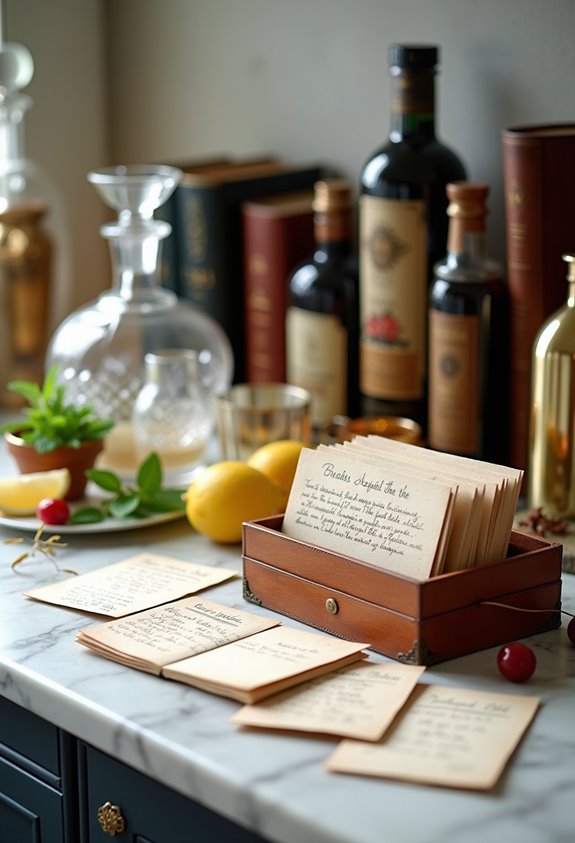
How To Organize A Home Cocktail Recipe Library?

To organize a home cocktail recipe library, one should begin by collecting recipes from various sources such as magazines and websites. Organize them by primary liquor type, cocktail structure, and occasion suitability. Guarantee clarity by documenting precise ingredient specifications and measurements. Use physical tools like indexed binders for easy access. Additionally, digital platforms can streamline recipe management through searchable functions and automated conversions. More methods for effective organization await those looking to optimize their cocktail collections.
Key Takeaways
- Categorize recipes by primary liquor types, cocktail structures, and seasonal occasions for intuitive browsing and quick retrieval.
- Use indexed binders or categorized notebooks for physical organization, aiding in easy identification and access.
- Implement clear labeling, color-coded tabs, and a master index to enhance visibility and streamline searchability.
- Store digital copies of recipes on a centralized platform with searchable features for efficient management and sharing.
- Include personal notes and ratings for each recipe to provide insights and enhance the cocktail-making experience.
Collecting and Categorizing Your Recipes
Organizing a home cocktail recipe library begins with the systematic collection and categorization of recipes. Individuals should compile favorite recipes from various sources, including magazines, websites, and personal notes. This collection may be stored in accessible containers like woven baskets or folders to promote usability. It’s important to prioritize frequently requested recipes and continually update the library with new discoveries. Categorizing recipes by seasonal cocktails enhances the experience, making it easier to select the perfect drink for any occasion. Further, grouping by primary liquor type, preparation method, and difficulty level prepares the home mixologist for diverse hosting needs. This structured approach fosters a sense of belonging among those passionate about crafting and sharing delightful cocktails. Additionally, consider incorporating essential bar cart accessories to enhance your cocktail-making experience.
Ensuring Clarity and Accuracy in Documentation
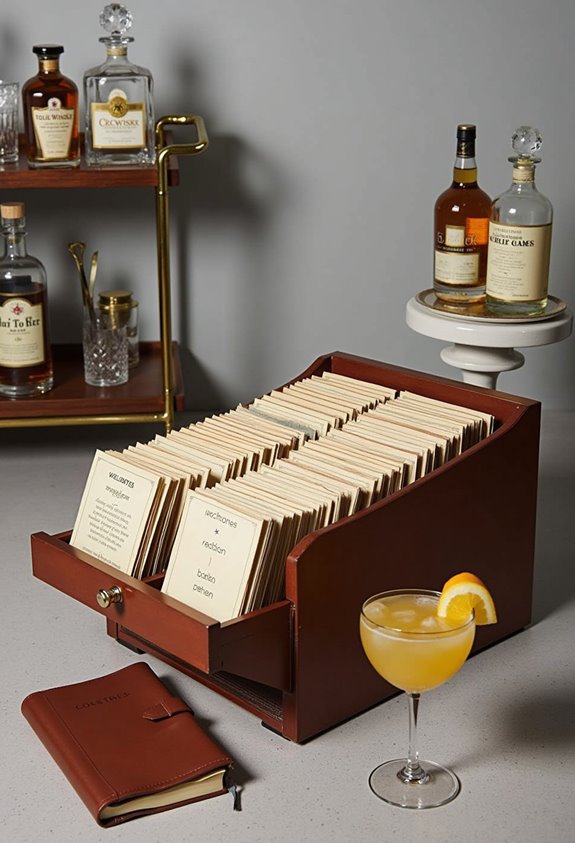
Confirming clarity and accuracy in documentation is essential for an effective home cocktail recipe library. This begins with ingredient precision, specifying exact brands and types, such as London Dry Gin and lime wheels, to eliminate confusion. Precise measurements, outlined in ounces or teaspoons, enhance repeatability. Clear terminology aids in understanding; for example, using “coupe” instead of “cocktail glass” prevents ambiguity. Simple, direct language makes instructions accessible, while a logical order minimizes complexity. Incorporating visual aids, like photographs and diagrams, bolsters clarity for users seeking to replicate results. Rigorous verification processes, including peer reviews and testing, further confirm reliability. Consistent formatting, such as templated layouts, enhances readability and fosters an organized approach to cocktail recipe documentation. Additionally, utilizing premium bitters selections can elevate the flavor complexity of cocktails, providing a more satisfying experience for users.
Choosing Effective Physical Organization Methods
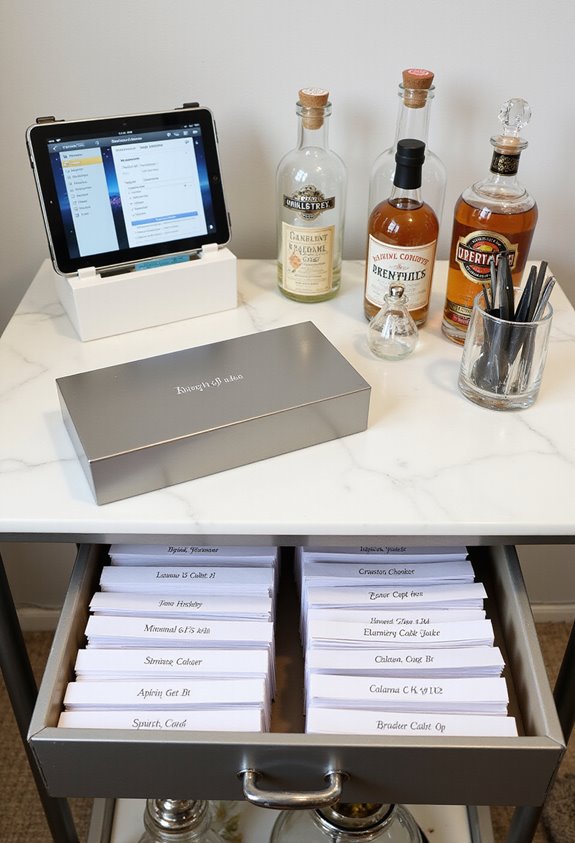
Effective physical organization methods play a significant role in establishing a functional home cocktail recipe library. Organizing recipes by primary base spirit types such as bourbon, gin, or rum enables enthusiasts to explore variations within their preferred categories. This foundational method supports easy reference and logical progression in building a home bar inventory. Additionally, grouping by cocktail structure, like sours or highballs, offers clarity, helping home bartenders understand core recipes and templates. Organizing by flavor profiles aligns with mood-based preferences for different occasions. Employing indexed binders or categorized notebooks facilitates quick browsing. Labeling recipes with clear icons or color codes for spirits and flavor categories enhances identification, ultimately simplifying the selection process for avid cocktail creators. Furthermore, implementing cleaning and maintenance routines for your cocktail equipment ensures optimal performance and longevity of your home bar tools.
Enhancing Accessibility for Easy Retrieval
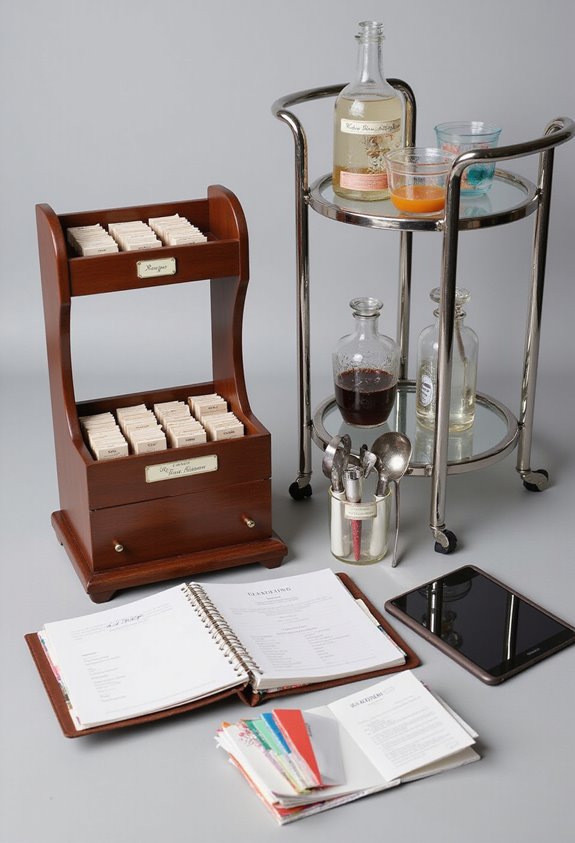
Accessibility in a home cocktail recipe library greatly enhances the retrieval process for users. Organizing recipes by context, such as occasions, preparation times, and pairings, allows for intuitive searches. Grouping cocktail favorites separately from experimental drinks further aids users in finding familiar options quickly. Clear labeling and a master index streamline identification and reduce search time. Color-coded tabs can visually segment categories, enhancing user experience. Frequently referenced recipes should be positioned conveniently for easy access. Additionally, maintaining uniform card sizes guarantees consistency and ease of handling. Users can enhance their interaction by including personal notes or ratings, providing valuable insights that foster a sense of community among cocktail enthusiasts. Accessing and enjoying these recipes becomes a straightforward and fulfilling task. Incorporating a stylish napkin holder can further enhance the overall aesthetic and functionality of your cocktail preparation space.
Using Digital Tools for Modern Recipe Management
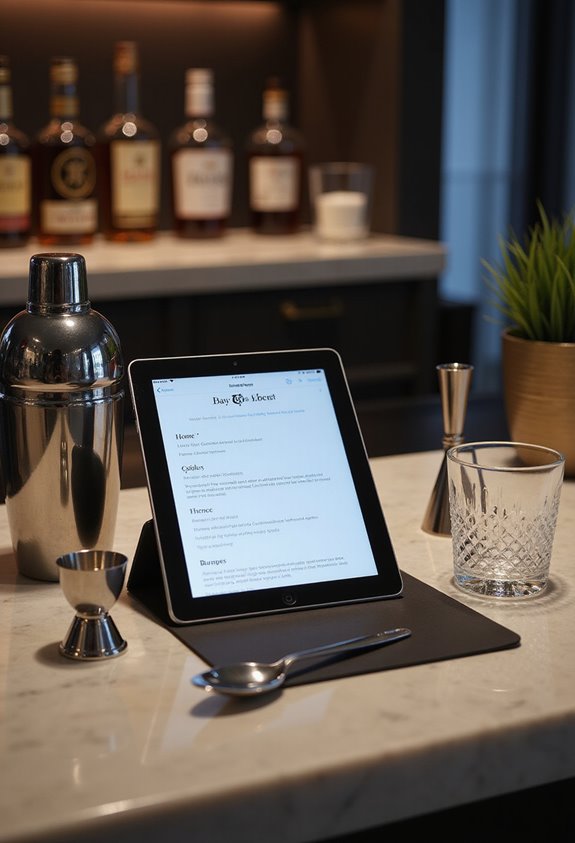
As the mixology industry continues to evolve, many establishments are turning to digital tools for modern recipe management. Centralized digital platforms allow for the storage of cocktail recipes, complete with detailed ingredients, measurements, and methods. These platforms enable recipe sharing and offer features like searchable interfaces, making retrieval quick and efficient. Additionally, intelligent batch calculators and automated conversions help manage volume adjustments, guaranteeing recipe integrity remains intact. Training modules embedded within these systems aim to enhance staff capabilities. Real-time analytics support performance tracking and provide oversight for operational control. By fostering collaboration, these digital tools guarantee consistent brand standards across multiple locations, enhancing the sense of community and belonging within the industry. Moreover, these platforms can be integrated with specialty cocktail mixers to streamline the cocktail preparation process.
Frequently Asked Questions
How Can I Determine Which Cocktail Recipes to Prioritize?
To determine which cocktail recipes to prioritize, one should balance classic favorites with trending beverages. This approach fosters inclusivity, ensuring a diverse selection that appeals to various tastes while enhancing shared experiences among friends and family.
What Common Mistakes Should I Avoid When Organizing Cocktail Recipes?
What mistakes can derail cocktail creativity? Prioritize mistake avoidance by ensuring recipe consistency, avoiding overcomplication, using quality ingredients, and adhering to ideal mixing techniques. A well-curated selection fosters a welcoming environment for cocktail enthusiasts.
How Do I Handle Recipes With Seasonal or Limited Ingredients?
Handling recipes with seasonal or limited ingredients involves tracking ingredient availability and implementing seasonal substitutions. Emphasizing connectivity through shared experiences, enthusiasts can enhance their collections while adapting to nature’s offerings, fostering collective camaraderie in the culinary journey.
Can I Incorporate Personal Touches Into Classic Cocktail Recipes?
Cocktails, like fingerprints, bear the marks of beauty in individuality. By adding personal flavor twists and unique ingredient substitutions, one transforms classic recipes into cherished expressions of hospitality, inviting connections through shared tastes and memorable experiences.
How Often Should I Review and Update My Cocktail Recipe Library?
The frequency guide suggests regular recipe refreshes, ideally quarterly or biannually, to guarantee the cocktail library stays current. This fosters community engagement, allowing users to connect with evolving tastes and trends within mixology.