As an Amazon Associate, we earn from qualifying purchases. Some links on this site are affiliate links at no extra cost to you. Our recommendations are based on thorough research and editorial judgment.

How To Review And Rate Cocktail Books For A Blog?

To review and rate cocktail books effectively, assess usability and design features, including binding, layout, and visual elements. Evaluate recipe clarity through precise measurements and clear instructions. Consider audience targeting by identifying reader preferences and demographics. Test recipes for accuracy using systematic methods and sensory evaluation. Scrutinize ingredient availability, providing substitution options when necessary. Finally, explore engaging presentation techniques for enhancing reader interaction. Further insights will illuminate more nuanced elements of cocktail book reviews.
Key Takeaways
- Evaluate usability and design features, focusing on durability, layout, and visual elements that enhance reader engagement and experience.
- Assess the clarity and quality of recipes, ensuring accurate measurements, step-by-step instructions, and clear ingredient contexts for varied skill levels.
- Identify the target audience and consider their preferences in style, presentation, and cultural context to enhance relevance and appeal.
- Test recipes for accuracy and balance, documenting sensory evaluations and feedback to ensure reliability in taste and presentation.
- Consider ingredient availability and flexibility, highlighting common items, substitution options, and the quality of ingredients for a better cocktail experience.
Evaluating Book Usability and Design Features
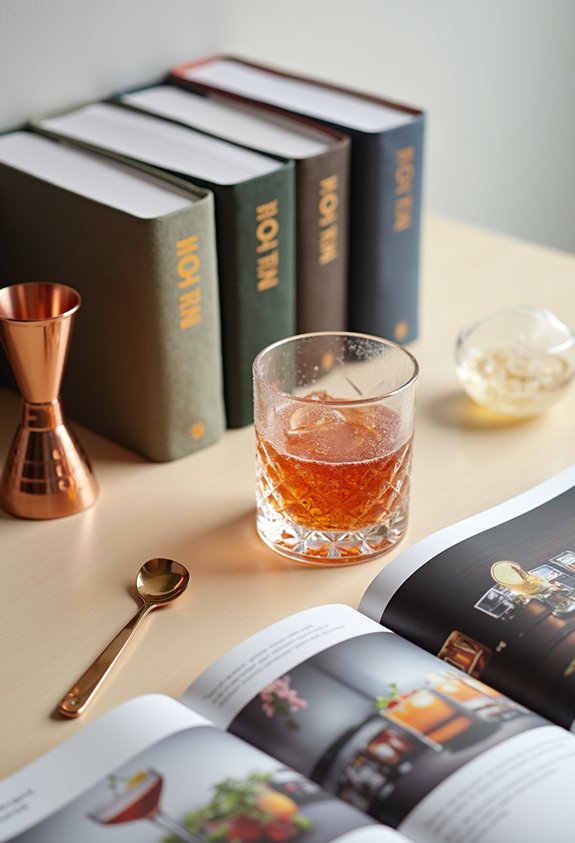
The usability and design features of cocktail books play an important role in enhancing the reader’s experience. Unique binding techniques, such as Japanese binding, contribute to the durability and tactile quality of these books. Folded recipe sheets that simulate a filled glass encourage interactive engagement. Hardcover construction and high-quality printed paper add perceived value and longevity. Visual elements, including mid-century themed illustrations, elevate the aesthetic appeal and help clarify complex recipes. Meanwhile, graphic design elements like ingredient-based ornaments not only make navigation easier but also enhance overall enjoyment. Compact size and well-thought-out layouts further improve portability and accessibility, essential for home bartenders. Therefore, the thoughtful design and usability of cocktail books foster a sense of belonging in cocktail culture. Additionally, incorporating essential bar cart accessories can enhance the overall cocktail-making experience at home.
Analyzing Recipe Clarity and Quality
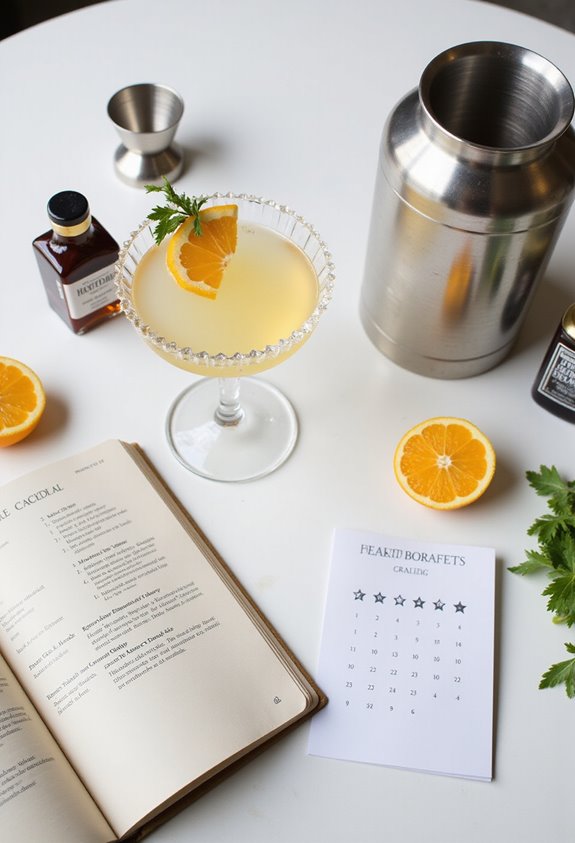
Recipe clarity and quality are fundamental components in cocktail books, impacting both reader satisfaction and the reproduction of cocktails. A well-written recipe should include exact ingredient measurements and specific types to guarantee consistent results. Clear, step-by-step instructions support readers of varying skill levels, making recipe testing accessible. Additionally, context about the ingredients, including flavor profiles and availability, enhances understanding and encourages effective ingredient sourcing. Vague terms should be replaced with explicit definitions, particularly for common bartending techniques. Furthermore, descriptions of taste balance and sensory experiences, along with visual aids, can elevate the reader’s engagement. Overall, clarity in methodology and terminology fosters confidence in home bartenders as they attempt to replicate sophisticated cocktails. Moreover, understanding efficient drainage design in bar sink installations can inspire creativity in cocktail presentation and preparation setups.
Assessing Audience Targeting and Content Depth
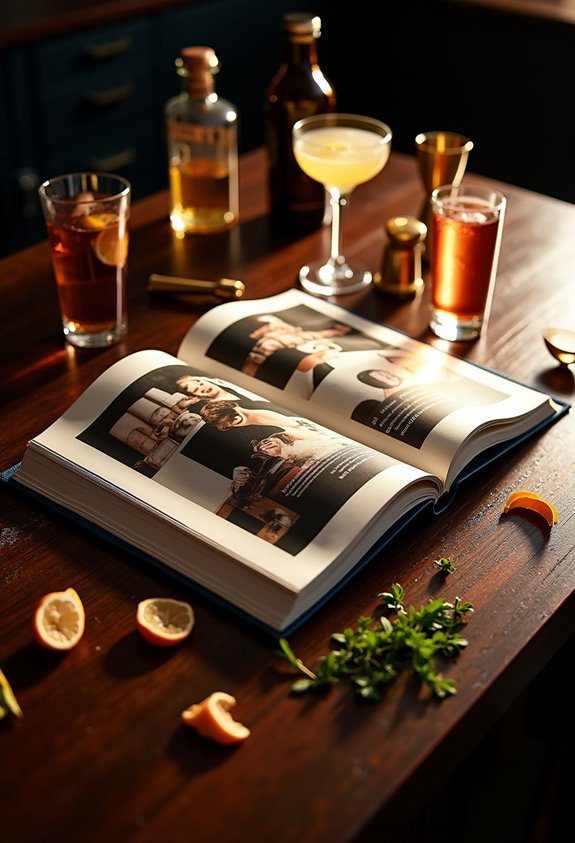
How can cocktail books effectively cater to diverse audiences while maintaining content depth? Identifying the target audience is essential for ensuring content relevance. For instance, younger readers may seek modern, innovative recipes, while classic cocktail enthusiasts often prefer historical insights. Gender considerations also shape preferences in style and presentation. Geographic location influences which cultural cocktails are appealing, reflecting local tastes. In addition, understanding readers’ expertise levels—from beginners to experts—helps tailor explanations and techniques appropriately. Engaging storytelling, thematic contexts, and visual aids may enhance accessibility for novices. Additionally, evaluating the depth of coverage—such as ingredient sourcing and technical nuances—can substantiate reader expectations, ensuring the cocktail book resonates deeply within its intended audience. Offering comprehensive information on beverage refrigeration options can also empower readers to better appreciate the nuances of cocktail preparation and serving.
Testing Recipes for Accuracy and Balance
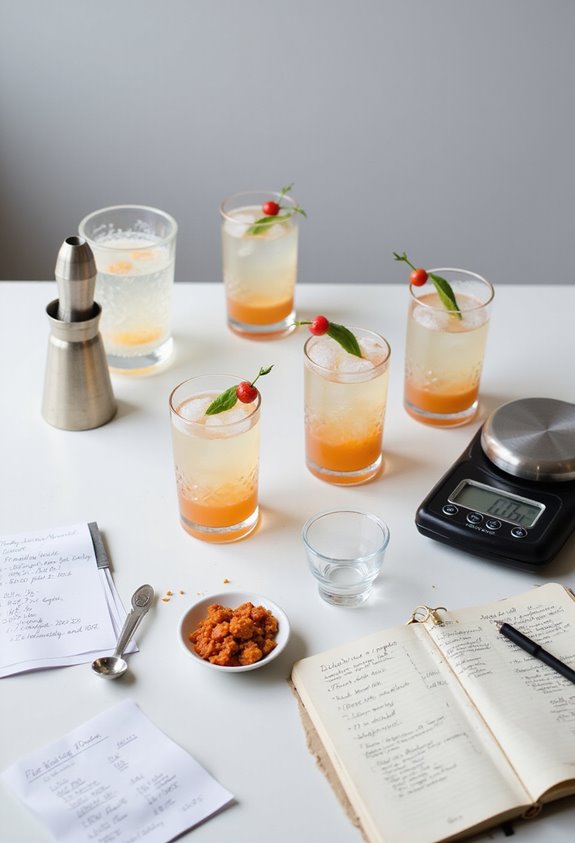
Testing cocktail recipes for accuracy and balance involves a systematic approach that prioritizes precision and repeatability. Bartenders utilize tools such as jiggers and graduated measuring beakers to guarantee accurate ingredient measurements, particularly when crafting cocktails with complex flavors. Consistency in measuring is essential, as even slight taste variations can appreciably affect drink enjoyment. A critical element of recipe testing includes conducting blind taste tests to identify balance in sweetness, bitterness, and ethanol levels. Additionally, testers are encouraged to document each sensory evaluation, noting flavor highlights and deficits. Adjustments are made incrementally based on feedback, allowing for fine-tuning toward an ideal balance. This meticulous method fosters a sense of community among cocktail enthusiasts aiming for cocktail perfection. Utilizing essential tools from cocktail shaker sets can further enhance the accuracy of measurements and the overall mixing experience.
Comparing Ingredient Availability and Flexibility
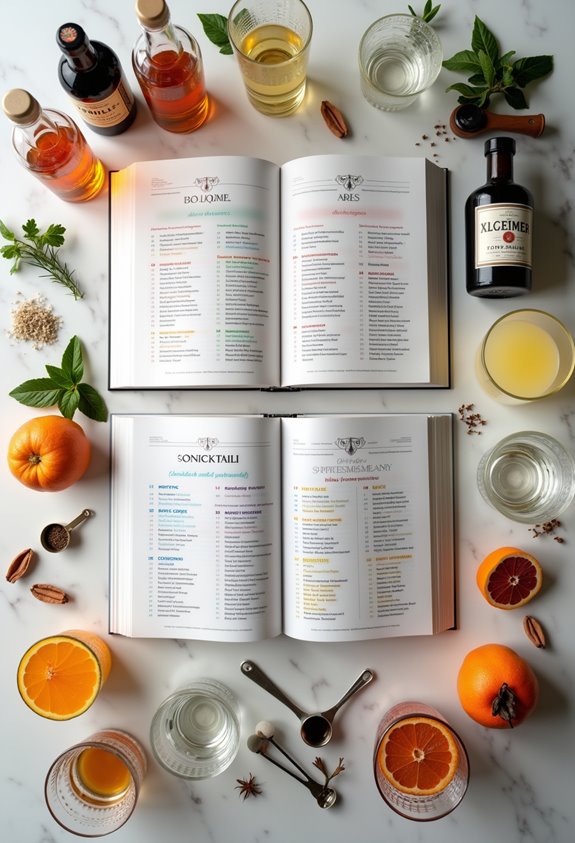
Ingredient availability and flexibility play a significant role in the accessibility of cocktail recipes found in various books. Many cocktail books emphasize readily available ingredients such as lemon and lime juice, simple syrup, and core spirits like gin and vodka. However, some offer a wider array of specialty items, which may necessitate ingredient sourcing from specialized shops. This variance impacts replicability among readers. Authors who provide substitution strategies, like replacing one spirit with another, facilitate greater adaptability. Books that categorize ingredients and suggest alternatives guarantee wider usability, helping readers navigate regional availability constraints. Reviews that highlight these features will resonate more with a global readership, making cocktail preparation an inclusive experience for enthusiasts at all levels. Additionally, books that focus on high-quality ingredients inspire readers to prioritize premium options, enhancing their overall cocktail experience.
Exploring Presentation and Engagement Techniques
As cocktail enthusiasts seek to enhance their mixology skills, the presentation and engagement techniques outlined in contemporary cocktail books have become increasingly significant. Visual aesthetics play a vital role, with emphasis placed on glassware shape, garnishes, and complimentary colors that enhance drink appeal. Detailed imagery captures these elements, often highlighted under warm lighting to elevate mood. Storytelling elements, such as historical anecdotes and cultural customs, enrich reader connection, providing context for classic cocktails. The books often feature organized layouts which simplify navigation, including thematic sections that enhance understanding. Practical engagement techniques, like DIY ingredients and tool suggestions, encourage experimentation. Overall, these presentation strategies effectively invite readers into a welcoming community of cocktail enthusiasts, while high-quality materials like stainless steel stirring spoons ensure that the tools they use are both durable and effective.
Frequently Asked Questions
How Do I Choose the Right Cocktail Book for My Skill Level?
Choosing the right cocktail book requires evaluating skill level. Beginners prefer foundational recipes and clarity, while those seeking advanced techniques benefit from deeper theory and creativity. Matching personal interests enhances learning and fosters a sense of belonging in mixology.
What Aspects Make a Cocktail Book Visually Appealing?
A cocktail book’s visual appeal blooms with harmonious color palettes and thoughtful layout design. These elements create a welcoming ambiance, inviting readers into a shared experience, much like gathering around a well-set table with friends.
Can Recipe Complexity Affect a Book’s Overall Usability?
Recipe complexity greatly influences a book’s overall usability, affecting recipe accessibility and skill progression. Balancing straightforward and intricate cocktails fosters a sense of belonging among enthusiasts while catering to diverse skill levels within the community.
How Can I Incorporate Cocktail History Into My Reviews?
To weave cocktail history into reviews, one should connect recipes to their historical context, illustrating beverage evolution. This approach builds a sense of belonging through shared narratives, enriching the reader’s understanding and appreciation of each drink.
Are There Specific Cocktail Trends to Consider When Reviewing Books?
When reviewing cocktail books, focusing on trends such as sustainable ingredients and local spirits highlights contemporary practices, fostering a sense of community among readers enthusiastic to explore authentic, eco-conscious mixology experiences reflective of their values.