As an Amazon Associate, we earn from qualifying purchases. Some links on this site are affiliate links at no extra cost to you. Our recommendations are based on thorough research and editorial judgment.

How To Pair Cocktails With Different Cuisines?

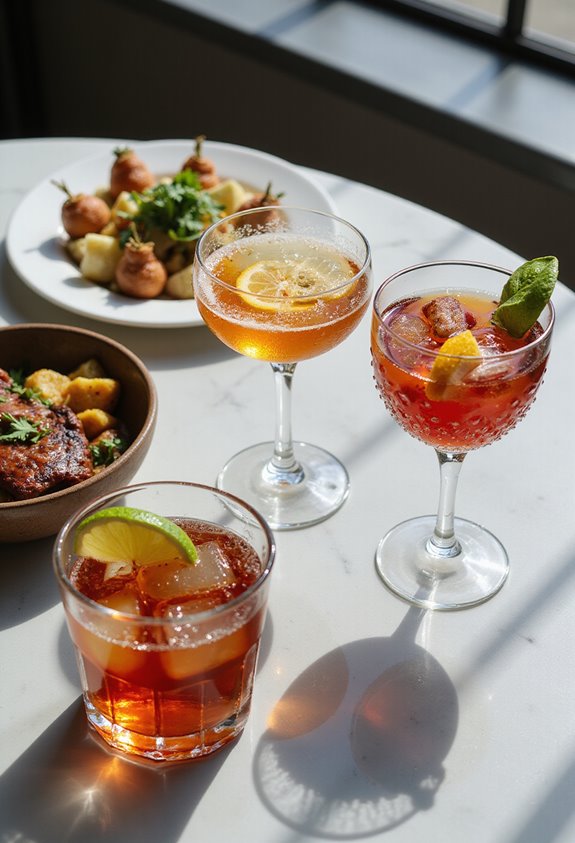
Pairing cocktails with various cuisines involves balancing flavor profiles and understanding regional influences. Cocktails with high-proof spirits suit hearty dishes, while lighter cocktails complement delicate fare. For Asian cuisine, cocktails like Lemongrass Collins counteract spice, whereas bourbon-based drinks enhance smoky barbecue flavors. Citrus plays a significant role, with drinks like Margaritas invigorating richer meals. In addition, herbal liqueurs and premium mixers further elevate the tasting experience. Exploring these techniques reveals more about effective cocktail pairings in culinary contexts.
Key Takeaways
- Match cocktail intensity with dish profile; hearty meals pair with high-proof spirits, while lighter dishes suit milder cocktails.
- Balance flavor profiles like sweetness, bitterness, and acidity for a harmonious dining experience.
- Use citrus-forward cocktails to cleanse the palate between spicy or rich dishes.
- Incorporate regional ingredients and flavors to enhance the cultural experience of food and drink pairings.
- Experiment with complementary and contrasting flavors to find personal preferences in cocktail pairings.
Understanding Cocktail and Cuisine Pairing Principles
When pairing cocktails with various cuisines, understanding the fundamental principles of flavor and intensity is essential for achieving a harmonious dining experience. Cocktail intensity plays a significant role in this pairing. Bold, high-proof spirits like whiskey and aged rum complement hearty dishes, while lighter spirits such as vodka and gin accompany more delicate fare. Balancing flavor profiles, including sweetness, bitterness, and acidity, enhances synergy between the cocktail and cuisine, contributing to a richer experience. Cocktails with acidity effectively refresh the palate, particularly after rich or creamy dishes. Additionally, complementary and contrasting flavors provide an opportunity for personalization in pairings, allowing diners to explore their preferences while enjoying the culinary journey. Incorporating premium mixers with all-natural ingredients can elevate the overall cocktail experience, ensuring a delightful match with the cuisine.
Pairing Cocktails With Asian Dishes
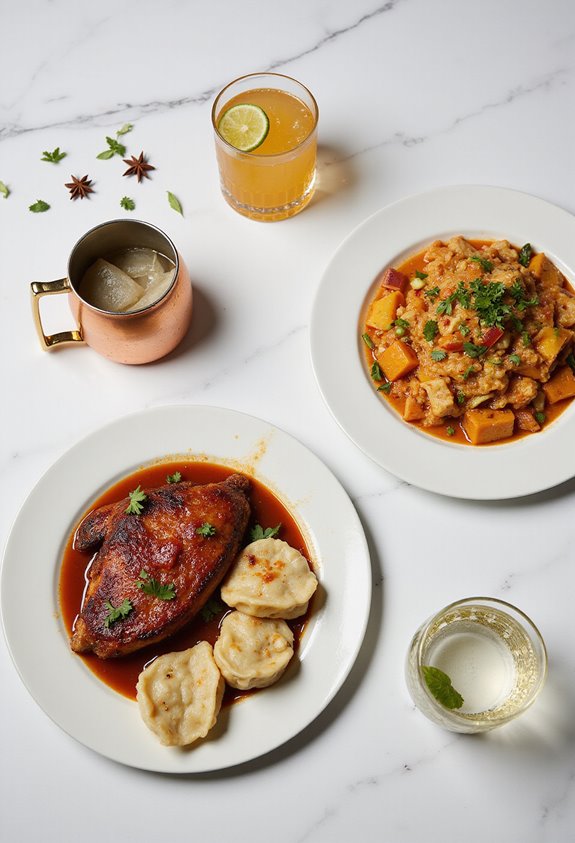
Pairing cocktails with Asian dishes presents unique opportunities to enhance the dining experience through thoughtful combinations of flavors. Cocktails that offer a spicy balance are ideal for complementing Asian cuisines. For spicy dishes like Sichuan-style chicken, invigorating options such as a Lemongrass Collins or a Mint Julep can counteract heat effectively. Mezcal, with its smoky notes, pairs well with bold flavors found in spicy Szechuan hot pot. Tropical infusions like a Lemongrass Ginger Martini provide a sharp contrast, enhancing the zesty elements of Southeast Asian cuisine. Chilled cocktails, enriched with fresh herbs and citrus, serve to cool the palate without overwhelming the intricate flavors inherent to these dishes. Such pairings deepen the overall enjoyment of Asian dining. Additionally, using high-quality spirits can greatly improve the infusion process, leading to more flavorful cocktails that perfectly complement these dishes.
Enhancing Flavors in Thai Cuisine
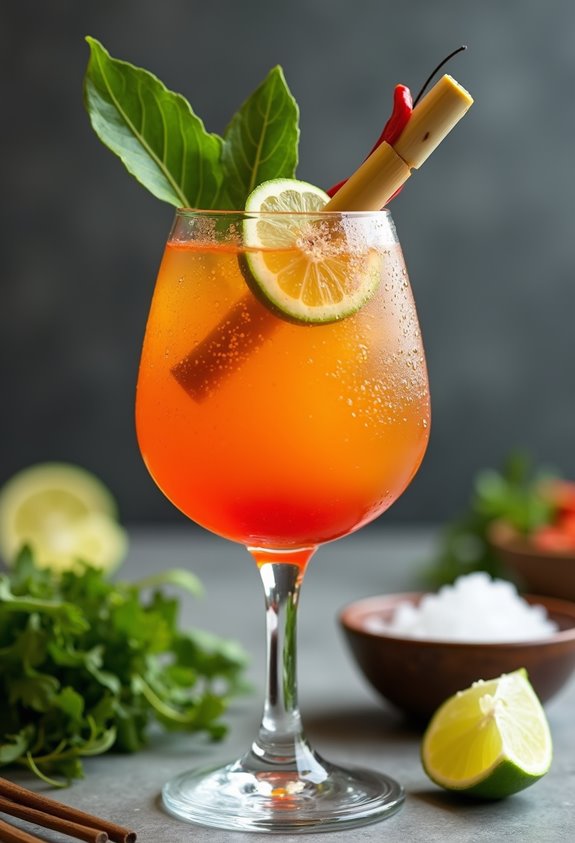
Thai cuisine is renowned for its intricate balance of five essential flavors: sweet, sour, salty, bitter, and spicy, which together create a complex culinary experience. Successful cocktail pairings can enhance these flavors through careful selection of Thai ingredient enhancements. For instance, cocktails utilizing lime or tamarind capture the sour notes prevalent in many dishes. Sweet elements, like palm sugar syrup or coconut cream, can soften spicy and salty flavors, while cocktails infused with herbs like Thai basil echo the fragrance of the cuisine. Additionally, drinks that incorporate bitters reflect the bitterness found in ingredients such as turmeric. This approach to Thai spice balancing elevates the dining experience, making each meal more enjoyable and cohesive, with cocktails acting as perfect companions. Furthermore, incorporating blood orange bitters can add a vibrant and sweet flavor that complements the complexity of Thai dishes.
Balancing Sweet and Spicy in Asian Fare
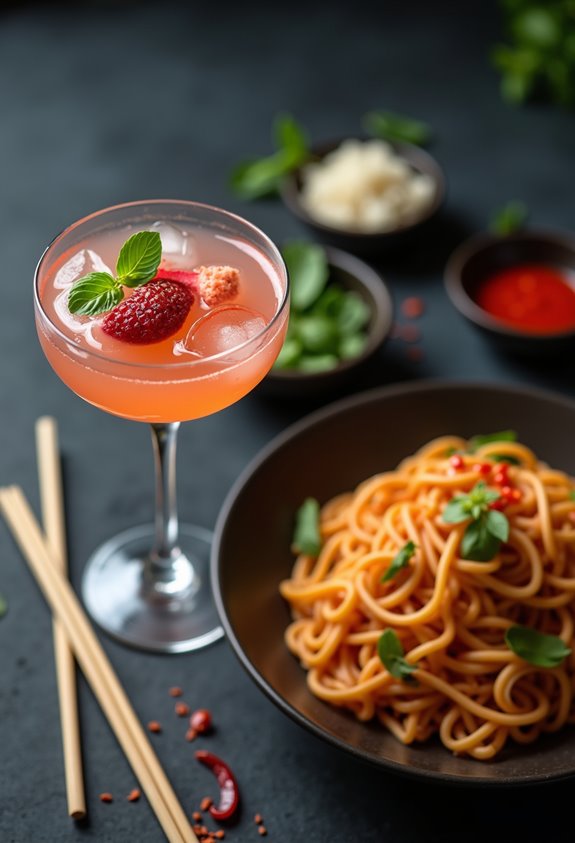
Balancing sweet and spicy flavors in Asian cuisine requires a careful approach to cocktail pairing that complements these contrasting tastes. The sweet spicy balance is essential, as sweetness can temper the heat from spicy dishes. Cocktails infused with citrus elements like lime or ginger, for instance, enhance the palate and provide invigorating notes against spice. Popular pairings include the Lemongrass Ginger Martini, which offers a vibrant blend of ginger and citrus, matching aromatic spices in Thai fare. Similarly, the Thai Basil Mojito exemplifies effective cocktail contrast, as its herbal notes smooth the heat of curries. Non-alcoholic options, such as sweetened yogurt drinks, also serve to balance the spiciness, offering versatile solutions for enhancing the overall dining experience. Additionally, using quality mixers can elevate the flavor profile of cocktails, ensuring a more harmonious pairing with Asian dishes.
Exploring European Cuisine Cocktail Pairings
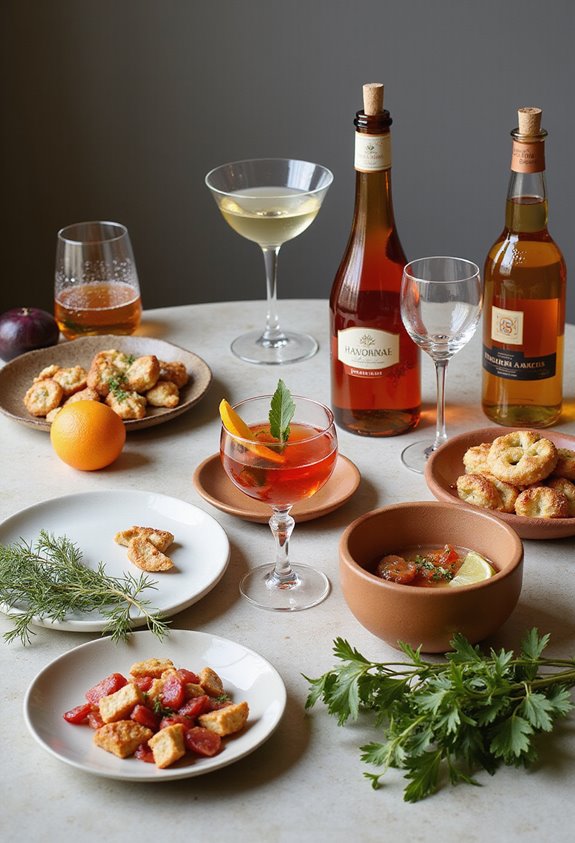
When exploring European cuisine, a diverse range of cocktail pairings emerges, reflecting the region’s culinary heritage. Pairing Hungarian spirits like pálinka with hearty dishes, such as goulash, showcases how sweetness contrasts with savory depth. The Pálinka Sour, an invigorating blend of fruit-based pálinka, lemon, and honey, complements rich flavors. In Nordic cuisine, cocktails infused with aquavit enhance the earthy tones of root vegetables and smoked fish. Vodka drinks, which are prevalent in Eastern Europe, balance the saltiness of pickled items. Additionally, herbal liqueurs add botanical layers, enriching the dining experience. All these selections reveal how thoughtfully chosen cocktails can harmonize with the region’s distinct culinary offerings, creating a sense of togetherness at the table. Modern wine racks can also enhance the overall dining experience by providing stylish storage for wine selections that complement these dishes.
The Perfect Match: Italian and Cocktails
Italian cuisine is renowned for its rich flavors and diverse dishes, and its corresponding cocktail pairings enhance these culinary experiences. Classic cocktails like the Negroni and Aperol Spritz embody the aperitivo culture, serving as perfect complements to various Italian dishes. The bittersweet complexity of a Negroni cuts through the richness of hearty ragù, while an Aperol Spritz refreshes the palate when paired with lighter fare, such as bruschetta. Cocktail craftsmanship shines through in regional variations, incorporating local Italian herbs, such as basil in gin-based drinks. Additionally, zesty cocktails like the Limoncello Martini balance creamy risottos beautifully. These pairings demonstrate how thoughtful cocktail selections can elevate the dining experience, fostering a sense of community and enjoyment among diners. Incorporating essential bar cart accessories can further enhance your cocktail presentation and overall entertaining experience.
Emphasizing Richness in Austrian Desserts
Austrian desserts are celebrated for their rich textures and complex flavors, inviting culinary enthusiasts to explore a variety of indulgent options. These desserts, such as Sachertorte and Apfelstrudel, feature buttery and creamy characteristics that harmonize beautifully with cocktails. The richness of these confections is often complemented by drinks that enhance cocktail flavor harmony. For example, pairing Sachertorte with a mocha liqueur cocktail deepens the chocolate experience. Similarly, Apfelstrudel’s flaky pastry pairs well with Austrian Schnapps, introducing a revitalizing contrast. Kaiserschmarrn finds a delightful companion in hazelnut liqueurs, echoing its nutty undertones. Ultimately, thoughtful drink pairings with Austrian desserts elevate the overall dining experience, highlighting the intricate relationship between food and beverage.
Celebrating Belgian Flavors With Cocktails
Belgian cuisine, renowned for its diversity and depth of flavor, offers an array of dishes that can be elevated through thoughtful cocktail pairings. Belgian beer serves as a cornerstone in many of these pairings, enhancing flavor profiles. For example, moules-frites harmonize with Belgian beer cocktails, particularly those using Dreary beer. Seasonal pairings are essential; spring cocktails feature Belgian Shandy, while summer calls for a revitalizing Saison Mojito. Culinary techniques, like using fruity Lambic in sangrias, highlight food compatibility, especially with lighter meats. Autumn inspires rich cocktails like the Dubbel Old Fashioned, complementing hearty stews. These combinations showcase how Belgian cocktails can enhance the dining experience, inviting everyone to savor and celebrate the gastronomy of Belgium together.
American Cuisine and Cocktail Harmony
How do cocktails elevate the experience of American cuisine? The pairing of cocktail varieties with American dishes creates a harmonious balance that enhances flavor profiles. For example, a martini complements East Coast oysters by countering their briny saltiness, while a Whiskey Sour cuts through the richness of fried chicken. Regional contrasts play a significant role in these pairings. A Manhattan aligns perfectly with the bold flavors of a grilled steak, whereas a Margarita brightens spicy Tex-Mex dishes. In the South, cocktails like the Limoncello Basil Fizz balance heavy barbecue fare. Understanding these pairings not only enriches the dining experience but also fosters a sense of belonging among food enthusiasts who appreciate America’s diverse culinary landscape.
Ideal Cocktails for BBQ and Grilled Foods
When selecting cocktails to accompany barbecue and grilled foods, one must consider the unique flavor profiles that enhance the experience. BBQ cocktail trends indicate that bourbon-based drinks, like the Kentucky Mule, perfectly complement smoky meats such as ribs and pulled pork. The caramel and vanilla notes in bourbon cut through rich sauces. Tequila cocktails, particularly the Spicy Margarita, harmonize with grilled seafood and Mexican-inspired BBQ, offering revitalizing acidity and vibrant flavors. Additionally, gin cocktails provide lightness with herbaceous notes, matching well with grilled chicken. Ultimately, rum-based drinks enhance fruity sides, creating balance. By leveraging these cocktails and appropriate grilling techniques, one can elevate any BBQ gathering into a cohesive and flavorful experience.
The Role of Citrus and Acidity in Pairings
The role of citrus and acidity in cocktail pairings considerably enhances the dining experience, particularly when accompanying rich or fatty foods. Citrus varieties such as lemon, lime, and grapefruit offer varying acidity levels that facilitate flavor enhancement and cocktail balance. These acidic profiles effectively cleanse the palate, preparing it for the next bite of rich foods. For example, cocktails like Margaritas and Whiskey Sours counteract heaviness in barbecued dishes. Moreover, citrus-forward cocktails pair exceptionally well with seafood, elevating delicate flavors. The herbal synergy found in drinks like Mojitos improves combinations with herbaceous dishes. Additionally, citrus acidity balances spicy foods, creating sweet contrasts that temper heat and enrich overall flavor profiles in diverse culinary experiences.
Contrasting Flavors in Culinary Experiences
Contrasting flavors play a pivotal role in enhancing culinary experiences, offering diners a complex interplay of tastes that can elevate both food and cocktails. Sweet contrasts, such as salted caramel, captivate by balancing sweetness with saltiness. Spicy experiments, like mango paired with chili, excite the palate by softening intense flavors. Meanwhile, savory blends, such as honey with garlic, deepen richness in dishes, enhancing cohesion and enjoyment. Bitter balance emerges when bitter herbs meet sour elements, rejuvenating taste profiles and preventing monotony. Finally, umami twists challenge conventions, pairing rich flavors with unexpected elements like dark chocolate. Such combinations create enticing culinary adventures, catering to diverse palates and boldly inviting individuals to explore new taste horizons in both food and cocktails.
Regional Pairings: A Cultural Journey
Exploring regional pairings offers a fascinating insight into how diverse cultures influence culinary and cocktail traditions. Each region’s unique flavors shape its drink selections. In the Caribbean, bold spices in dishes such as jerk chicken are balanced by rum cocktails like Piña Colada, blending sweetness and spice. Meanwhile, Mexican cuisine benefits from agave spirits, where tequila enhances tacos and smoky mezcal complements barbecued meats, reflecting local agave roots. Latin American pairings extend beyond Mexico, uniting ceviche with Pisco Sour and Brazilian barbecue with Caipirinhas. Asian cuisines find harmony with sake and gin cocktails, accentuating fresh seafood and herbaceous dishes. These examples showcase how regional influences intertwine culinary traditions with the art of cocktail pairing, inviting shared cultural experiences.
Mastering Pairing Techniques for Flavor Cohesion
Mastering pairing techniques for flavor cohesion requires a thorough understanding of how food and cocktails can complement or contrast with one another. Modern pairings often seek balance, utilizing complementary notes such as citrus cocktails alongside seafood. Contrasting pairings, like sweet cocktails with salty dishes, create dynamic flavor profiles. The quality of ingredients enhances these experiences, contributing to overall harmony. Light, fresh cocktails with herbal notes pair well with delicate foods, while richer cocktails match heartier dishes like barbecue. Aromatic elements can cleanse the palate, ensuring a cohesive tasting journey through the meal. As dining evolves, embracing flavor innovations allows for exciting combinations, enriching the overall culinary experience and fostering a sense of community among diners.
Frequently Asked Questions
Can I Create Cocktails at Home for Specific Cuisines?
Yes, anyone can create cocktails at home for specific cuisines. By exploring cocktail recipes with ingredients that highlight cuisine compatibility, individuals can craft unique drinks that enhance their culinary experiences and foster a sense of belonging.
How Do Seasonal Ingredients Affect Cocktail Pairings?
Seasonal ingredients elevate cocktail pairings by aligning seasonal flavors with ingredient availability, enhancing harmony and complexity. Vibrant summer fruits or warm autumn spices create memorable connections, inviting users into a shared experience of culinary delight and community.
Are There Non-Alcoholic Options for Pairing With Cuisines?
Non-alcoholic options, like mocktail pairings and herbal infusions, provide delightful alternatives to traditional drinks, enhancing various cuisines. They celebrate flavor balance and seasonal ingredients, inviting everyone to enjoy sophisticated dining experiences together.
How Can Presentation Enhance Cocktail and Food Pairings?
Presentation enhances cocktail and food pairings by utilizing visual aesthetics and garnishing techniques that captivate guests. A harmonious look not only stimulates appetite but also fosters a sense of belonging and shared experience among diners.
What Trends Are Emerging in Cocktail and Cuisine Pairings?
In a vibrant tapestry woven from sustainable ingredients and global flavors, emerging trends reveal cocktails embracing umami, inventive techniques, and wellness-driven options. This evolution invites everyone to gather, share, and celebrate diverse culinary experiences together.