As an Amazon Associate, we earn from qualifying purchases. Some links on this site are affiliate links at no extra cost to you. Our recommendations are based on thorough research and editorial judgment.

How Do Bars Create Signature Cocktails For Their Menus?

Bars create signature cocktails by blending storytelling, cultural influences, and seasonal ingredients. They emphasize a bar’s identity through unique flavor profiles that resonate with patrons. Techniques for mixing, precise measurements, and enhancing presentation greatly impact the final product. Thoughtful naming fosters customer familiarity and encourages repeat orders. Continuous trend monitoring guarantees alignment with consumer preferences. Engaging narratives and creative presentations are essential for a memorable drinking experience. Further insights reveal additional strategies for cocktail development.
Key Takeaways
- Bars often draw inspiration from regional ingredients and cultural influences to create unique flavor profiles for signature cocktails.
- Compelling narratives and themed presentations enhance the emotional connection and engagement with the cocktails, encouraging repeat orders.
- Signature cocktails align with the bar’s brand identity, reflecting its values and enhancing overall customer experience.
- Rigorous testing, including blind tastings, helps refine flavors and ensure the balance of ingredients in signature cocktails.
- Creative and memorable names, along with thoughtful garnish techniques, support brand recognition and enhance the visual appeal of cocktails.
The Importance of Storytelling in Cocktail Creation
How can storytelling enhance the creation of signature cocktails? By weaving a compelling narrative around each drink, bartenders can establish a strong customer connection. A well-crafted narrative arc, with elements of conflict and resolution, fosters emotional engagement and transforms the cocktail experience. Storytelling techniques such as focusing on an ingredient’s drink history or the overarching message behind the cocktail lend depth and meaning. As bars create immersive experiences, descriptive names and thematic presentations elevate their menus, encouraging patrons to explore. This approach not only enhances perceived value but also cultivates loyalty and community. Engaging narratives invite guests to participate in the evolving story, making every sip a reflection of the bar’s identity and vision. Additionally, providing a variety of tools for cocktail preparation can further enhance the bartending experience, ensuring that each drink is crafted with precision and care.
Finding Inspiration From Culture and Place
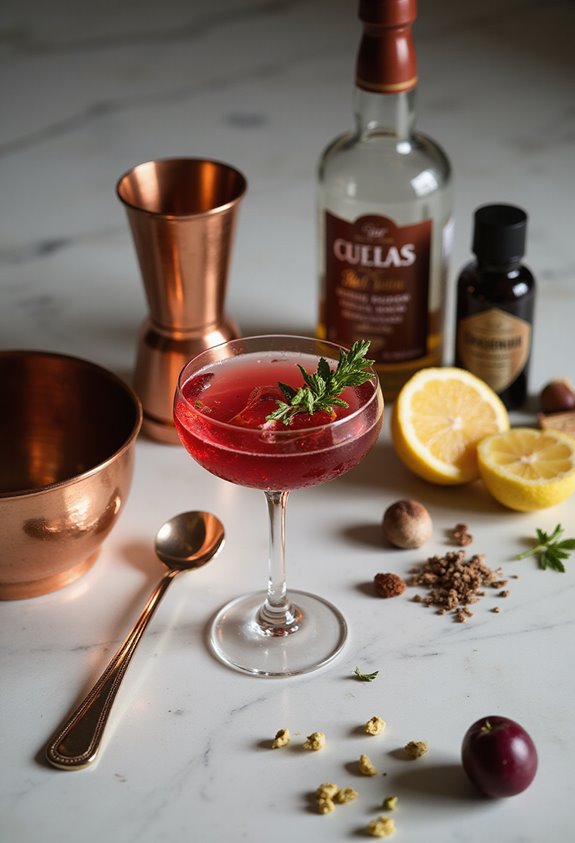
Cultural and geographical influences serve as pivotal sources of inspiration for creating signature cocktails in bars around the world. Many establishments utilize regional ingredients, incorporating native fruits, herbs, and spices to reflect local agricultural products. For instance, Brazil’s caipirinha highlights cachaça, a spirit distilled from fermented sugarcane native to the region. Bartenders often revisit historical events or traditions, crafting drinks that resonate with local identity, such as New York’s Penicillin, linked to the city’s vibrant bar scene. Additionally, seasonal availability shapes recipes, fostering a connection to the community’s harvests. By merging cultural influences with local flavors, bars create distinctive cocktail experiences, drawing patrons who yearn to celebrate their heritage through what they drink. Infusion techniques such as using fresh ingredients can elevate the flavor profiles of these signature cocktails, making them even more memorable.
Aligning With Brand Identity
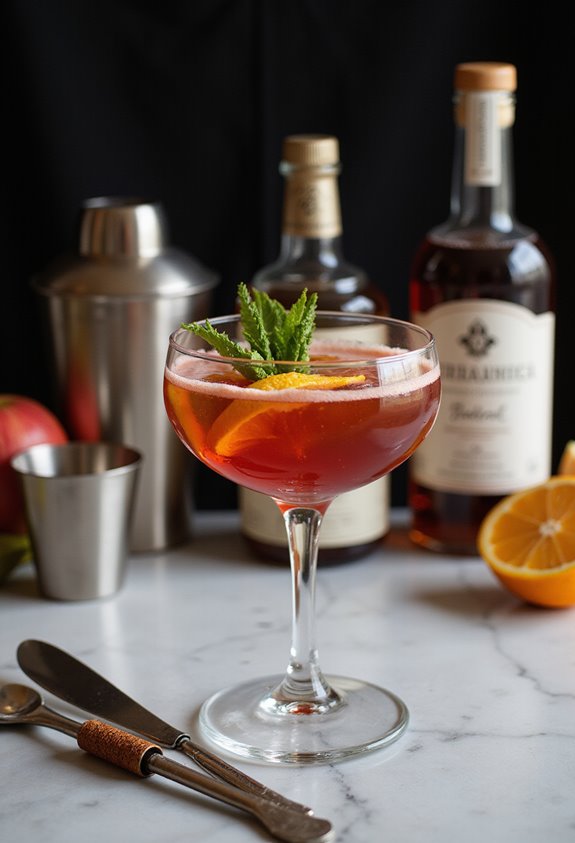
As signature cocktails increasingly serve as reflections of a bar’s identity, establishments leverage these drinks to articulate their core values and narrative. By marrying a cocktail’s unique flavor profile with the bar’s brand voice and visual identity, bars create authentic experiences for patrons. Thoughtful presentation, including glassware and garnishes, enhances a cocktail’s visual appeal while reinforcing the establishment’s ethos. For example, using brand colors derived from natural ingredients can visually connect a drink to its origin. Additionally, memorable naming, inspired by the bar’s mission or theme, contributes to brand recognition and fosters loyalty. Collectively, these elements transform signature cocktails into powerful tools for engaging customers and solidifying brand presence in a competitive market. Furthermore, incorporating bar service mats can enhance the overall aesthetic and efficiency of cocktail presentation, ensuring that bartenders maintain a clean and stylish workspace.
Choosing the Right Base Spirit
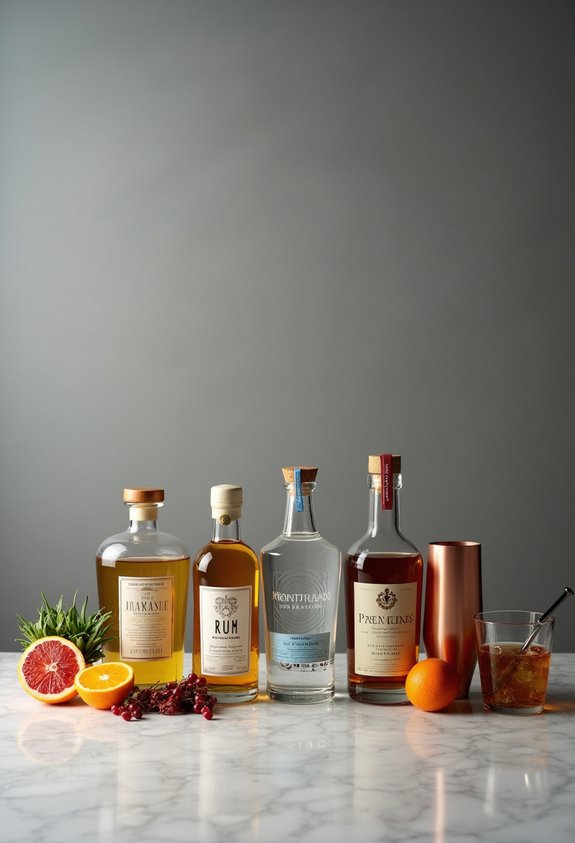
Selecting the appropriate base spirit forms the cornerstone of crafting an effective signature cocktail. Popular spirit categories include vodka, gin, rum, tequila, and bourbon, each chosen for their distinct flavor profiles and broad appeal. Vodka serves as a versatile, neutral canvas that can enhance various flavor pairings. In contrast, bourbon offers deeper, more robust profiles, perfect for spirit-forward mixes. Tequila and rum add unique regional character, resonating with specific cultural themes. Bartenders often consider audience preferences and bar themes when making their selection, ensuring the base spirit aligns with customer expectations. This careful choice not only influences the cocktail’s identity but also guides the overall drinking experience, enhancing connection among patrons and enriching their social gatherings. Additionally, selecting the right cocktail glassware can significantly elevate the presentation and enjoyment of the drinks served.
Selecting Complementary Ingredients
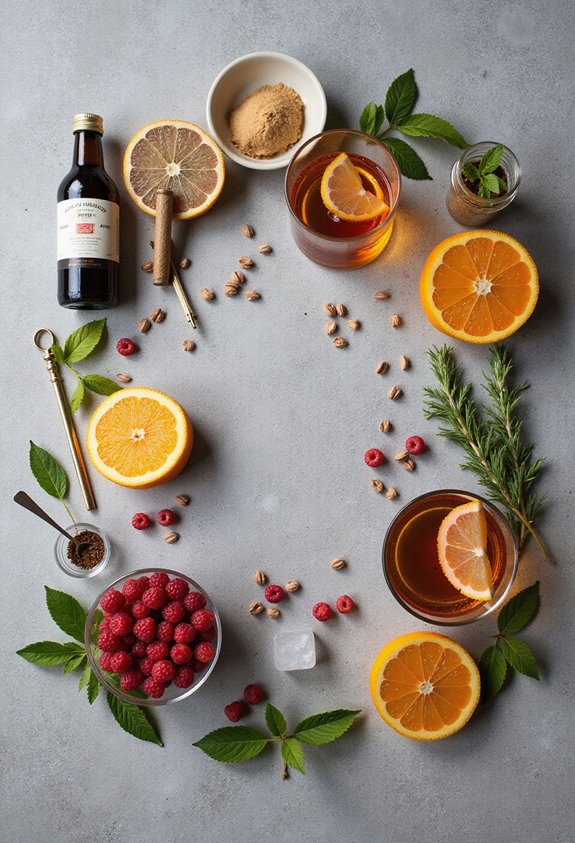
Crafting a signature cocktail requires a meticulous approach to selecting complementary ingredients that enhance the base spirit. Bars often employ flavor harmony by pairing contrasting tastes, such as bitter with sweet or sour with salty, to create character and balance. Classic cocktails exemplify effective ingredient synergy, evident in a Manhattan’s bitter-sweet combination or a Margarita’s sour-salty rim. Utilizing fresh, seasonal, and local ingredients boosts the cocktail’s appeal, creating connections with patrons. Herbs and spices also contribute aromatic complexity. By understanding ingredient relationships, bartenders cultivate memorable drinks while avoiding overwhelming any single flavor. This careful selection process showcases the artistry of cocktail creation, encouraging patrons to explore diverse flavor profiles on each visit. Additionally, incorporating natural ingredients can enhance the overall experience, similar to how acacia cutting boards utilize non-toxic materials for safe food preparation.
Achieving Flavor Balance and Complexity
Achieving flavor balance and complexity in cocktails is a sophisticated endeavor that builds upon the careful selection of ingredients. A successful cocktail harmonizes sweetness, acidity, bitterness, saltiness, and umami. Classic ratios, such as 2 parts spirit to 1 part sweet and sour, guide this balance. Acidity enhances taste perception by brightening flavors and countering sweetness, often achieved through citrus juices. Bitterness, found in ingredients like bitters and herbal liqueurs, adds depth and prevents cloying sweetness. Bartenders skillfully manipulate these elements through careful measurements, adjusting flavor interplay to create distinctive profiles. The interplay among flavors is finely tuned to guarantee no single taste dominates, resulting in a richer, well-rounded cocktail experience that fosters a sense of belonging in shared enjoyment. The use of cocktail bitters can significantly enhance the depth and complexity of flavors in a drink.
Techniques for Mixing and Preparation
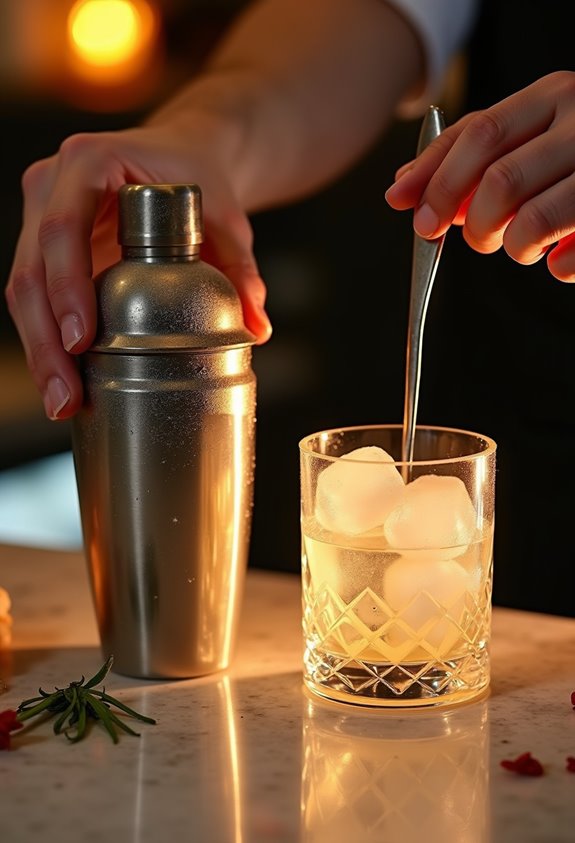
Effective techniques for mixing and preparation are fundamental components in creating exceptional cocktails. Remarkably, stirring is suited for spirit-only cocktails, while shaking is essential for cocktails with liqueurs or fruit juices. Skilled bartenders utilize various mixing techniques and preparation methods, such as gentle muddling, to extract flavors without introducing bitterness. Tool selection, like wooden pestles or stainless-steel muddlers, plays a key role in flavor release. Additionally, ice handling profoundly impacts dilution and taste; large ice cubes chill effectively while minimizing dilution. Precision in measurement with jiggers guarantees balanced flavors, contributing to the cocktail’s overall quality. Straining after mixing serves to enhance clarity, resulting in smooth-textured beverages that satisfy guests seeking a delightful drinking experience.
Enhancing Presentation and Garnishing
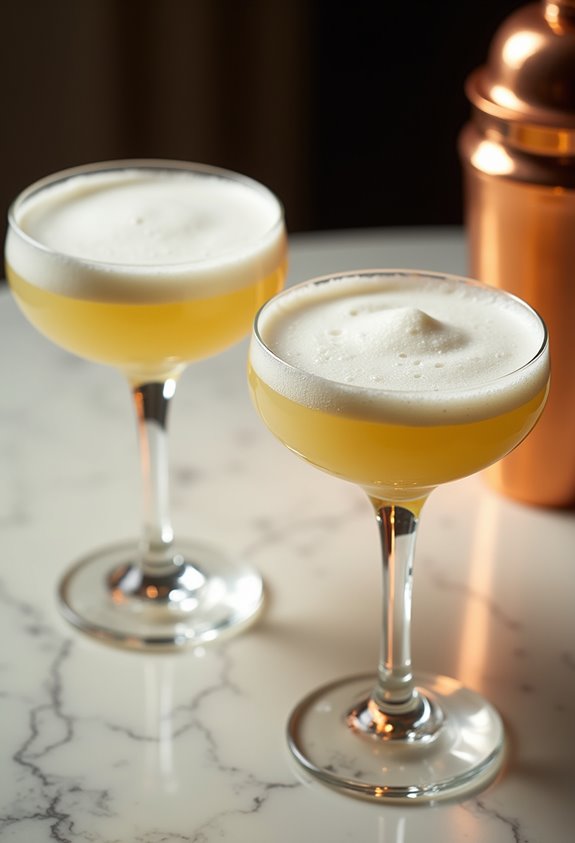
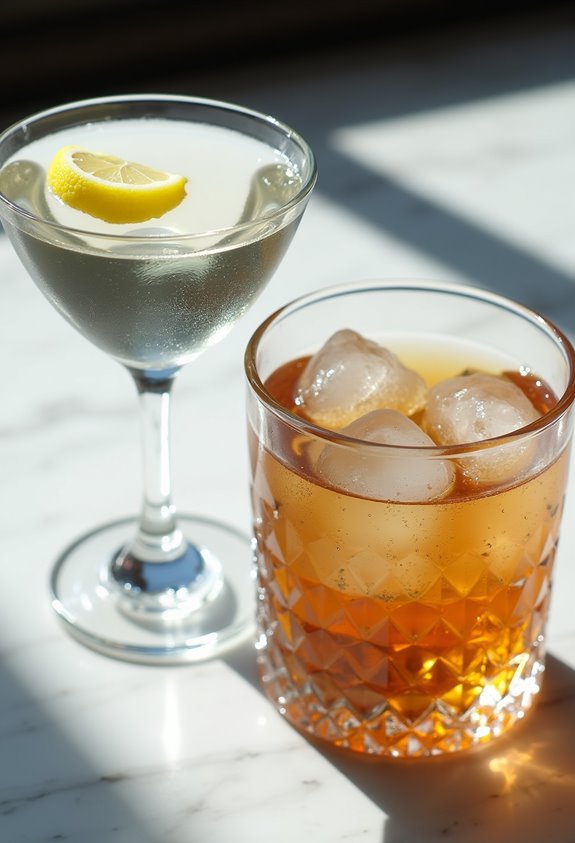
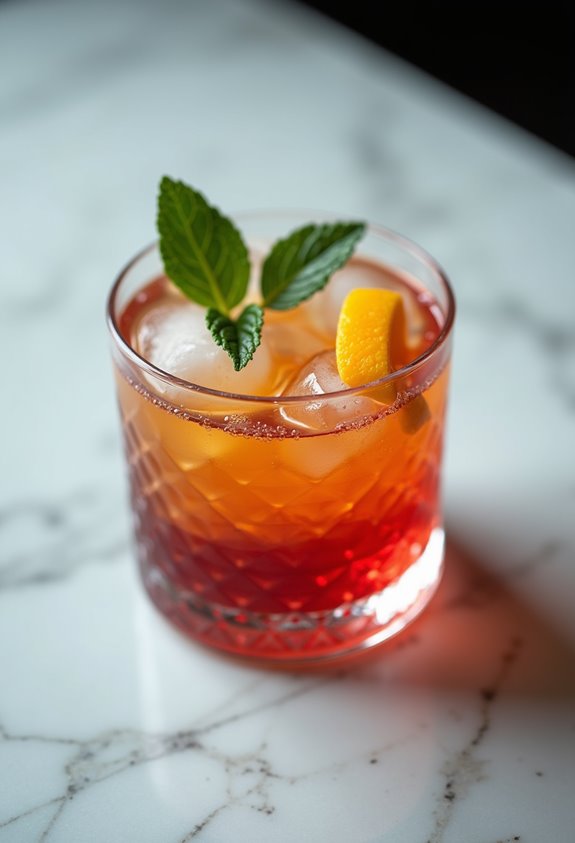
Typically, a well-prepared cocktail gains significantly from attention to presentation and garnishing. Bars utilize various garnish techniques to enhance aesthetics and flavor profiles. Fresh herbs like mint and rosemary add vibrant color and aroma, while citrus twists introduce texture and contrast. Lighting effects play an essential role, enhancing the vibrancy of colors and drawing attention to intricate garnishes. LED-lit glasses and backlit bars create a memorable experience, encouraging guests to capture and share their cocktails. Soft, warm lighting, such as string lights, fosters an inviting ambiance. The thoughtful combination of garnish techniques and strategic lighting not only elevates the cocktail’s appearance but also enriches the overall guest experience, reinforcing a sense of belonging within the bar community.
The Art of Naming Your Cocktail
What makes a cocktail name memorable and effective in a bustling bar environment? Successful cocktail nomenclature balances creativity with clarity. Memorable titles resonate with patrons, often evoking cultural references or ingredient descriptors that enhance customer engagement. A name like “Moscow Mule” reflects both the cocktail’s origin and key components, attracting interest through effective branding. Market trends favor simplicity; names should be easy to pronounce to reduce barriers at the bar. Overly complex or obscure titles can alienate customers, deterring potential orders. Additionally, aligning the name’s tone with the cocktail’s flavor promotes mood alignment, creating a seamless customer experience. Ultimately, thoughtful naming fosters familiarity, encouraging repeat orders while simultaneously enchanting new guests.
Importance of Testing and Iteration
Creating signature cocktails involves not only imaginative naming but also rigorous testing and iteration to refine flavors and guarantee quality. The iterative process begins with testing methods such as blind tastings, which eliminate bias, allowing honest feedback on a cocktail’s flavor and presentation. Control groups help ascertain reliable comparisons between different versions. Each iteration focuses on adjusting ingredient ratios to achieve peak balance, while hosting special tastings gathers consumer insights. This systematic approach allows bartenders to document successful changes while addressing any weaknesses. Ultimately, thorough testing uncovers the best flavors and presentation techniques, fostering ownership among staff and guaranteeing that each signature drink meets the bar’s standards for taste and consistency, enhancing the overall guest experience.
Adapting to Consumer Preferences
How can bars successfully adapt their signature cocktails to ever-evolving consumer preferences? By closely monitoring consumer trends and engaging in flavor exploration, establishments can create drinks that resonate with their clientele. Recent data reveals a notable rise in coffee-flavored cocktails, alongside increased popularity for indulgent flavors like chocolate and vanilla. In contrast, tropical fruit flavors continue to enchant 30% of patrons. Additionally, bars are embracing premium spirits, with 41% of cocktail drinkers expressing a preference for high-quality ingredients. This shift toward premiumization drives mixologists to innovate, incorporating unique botanicals from craft distilleries. Ultimately, bars that align their offerings with consumer desires and high-quality standards enhance their appeal, fostering a sense of belonging among discerning drinkers.
Frequently Asked Questions
How Long Does It Take to Develop a Signature Cocktail?
The development process of a signature cocktail typically spans several days to weeks. It involves careful ingredient selection, taste testing, and refinement to guarantee a delightful balance, fostering a sense of belonging among patrons who enjoy unique offerings.
What Tools Are Essential for Crafting Cocktails?
Essential tools for crafting cocktails include various shaker types for mixing, a muddler for flavor extraction, and specific garnish techniques to enhance presentation. These elements foster creativity and connectivity among those who share a love for mixology.
How Do Bars Promote Their Signature Cocktails?
Bars promote their signature cocktails through irony-laden social media posts and engaging promotional events, creating a sense of belonging among patrons. By fostering community involvement, they elevate ordinary drinks into coveted experiences worth sharing and celebrating.
Can I Recreate These Cocktails at Home Easily?
Recreating signature cocktails at home is achievable with simple cocktail ingredients and basic home mixology skills. Enthusiasts can enjoy experimenting, adapting recipes to personal preferences while cultivating a sense of belonging in their social circles.
What Trends Influence Current Cocktail Creations?
Current cocktail creations are influenced by sustainability trends and innovative flavor infusions. Consumers embrace seasonal ingredients and unique tastes, fostering a sense of belonging through shared experiences and adventurous flavor journeys in their drinking culture.