As an Amazon Associate, we earn from qualifying purchases. Some links on this site are affiliate links at no extra cost to you. Our recommendations are based on thorough research and editorial judgment.

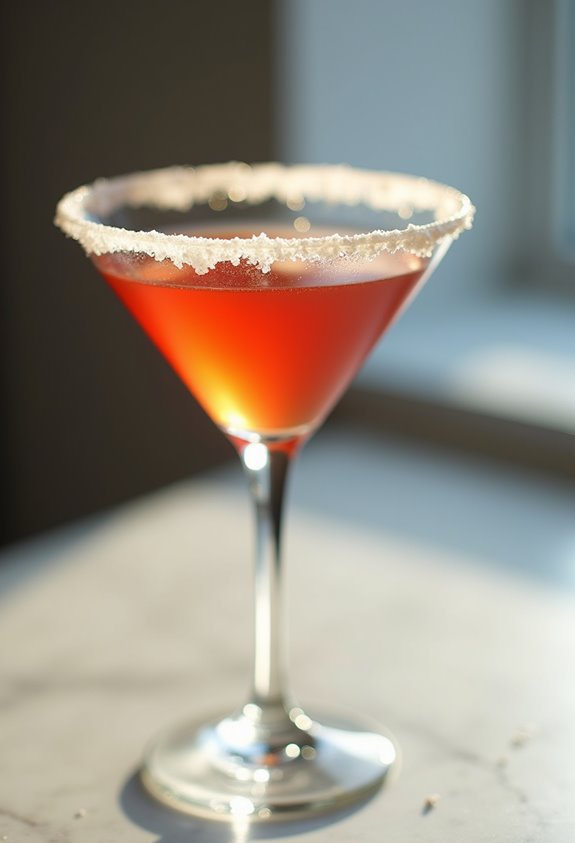
Why Are Some Cocktails Served With A Salt Rim?

Cocktails are often garnished with a salt rim to enhance their flavor profiles and create balance, particularly in classics like margaritas and Bloody Marys. Salt functions as a taste modulator, suppressing bitterness and amplifying sweetness and umami flavors. This technique enriches the overall drinking experience by harmonizing contrasting elements. Additionally, salt rims reflect cultural traditions, particularly in Mexican hospitality. Readers may find valuable insights on different salt types and innovative combinations that elevate mixology.
Key Takeaways
- Salt rims enhance the overall flavor profile by balancing sweet, sour, and bitter notes in cocktails.
- They suppress bitterness, allowing sweeter flavors to be more pronounced and enjoyable.
- Salt amplifies umami and sour flavors, creating a more complex and harmonious taste experience.
- Specialty salts offer unique mineral complexities, adding a creative twist to traditional cocktails.
- Visually appealing salt rims elevate presentation, inviting social interaction and enhancing the drinking experience.
The Science of Salt in Mixology
How does salt influence the art of crafting cocktails? Salt plays a vital role in taste modulation, enhancing the sensory experience of drinks. It suppresses bitterness, allowing sweetness to shine through. This salt interaction not only amplifies sweet flavors but also elevates sour and umami notes, creating a more balanced cocktail profile. Specialty salts, such as kala namak or sal de gusano, add complexity with unique mineral content and flavor nuances. When applied thoughtfully, whether as a rim or directly in the mix, salt stimulates taste buds and aromas, harmonizing the drink’s components. The balance achieved is essential; too much salt can overpower, while the right amount enhances flavor clarity, turning a simple cocktail into an art form. Additionally, the use of unique flavors in cocktails can be further complemented by the salt rim, enhancing the overall tasting experience.
Classic Cocktails Featuring Salt Rims
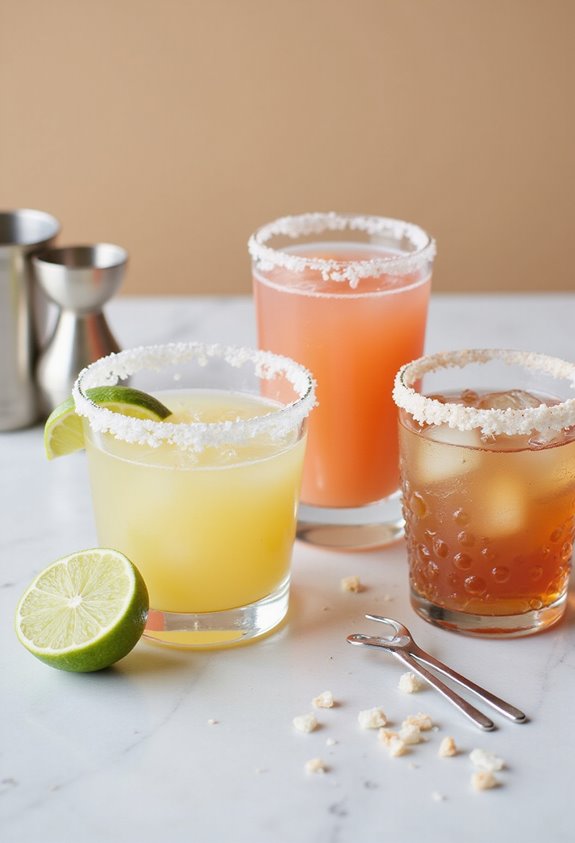
Classic cocktails featuring salt rims have earned their place in bars worldwide, celebrated for their ability to enhance flavor profiles. The Margarita, a classic combination of tequila, lime juice, and triple sec, serves as a foundation for various Margarita variations. These drinks maintain the salt rim tradition, improving taste dynamics. The Salty Dog cocktail, composed of vodka or gin and grapefruit juice, benefits from its salt rim that balances the citrus’s sweet and sour elements. The Bloody Mary achieves depth through a salt rim that intensifies its savory character. Additionally, Paloma cocktails, featuring tequila and grapefruit soda, utilize salt rims to elevate brightness, ensuring a delightful sipping experience. Together, they showcase salt’s essential role in popular beverages. Furthermore, the quality of materials used in bar tools can influence the overall cocktail experience.
Types of Salt for Rimming Glasses
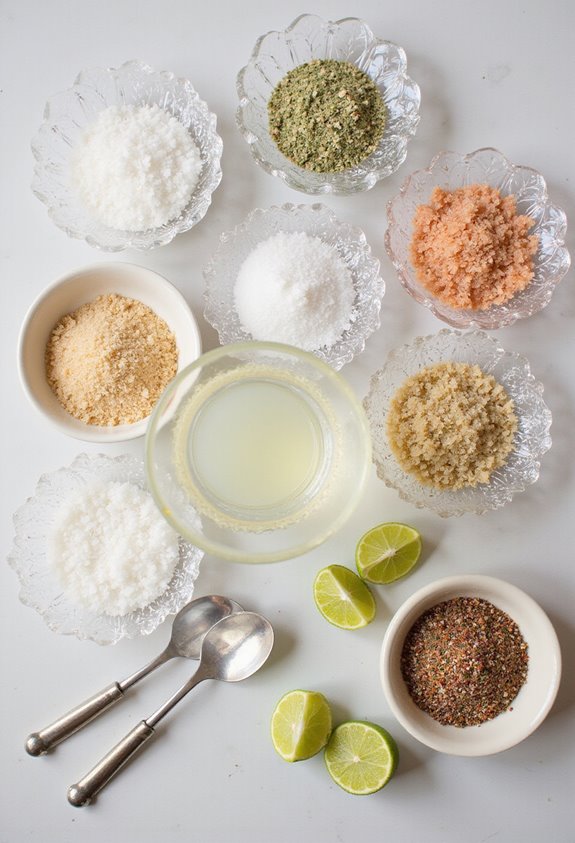
Various types of salt can be used for rimming glasses, each offering unique characteristics that influence the overall cocktail experience. Kosher salt benefits from its mild flavor and coarse texture, making it a popular choice for cocktails like margaritas. Sea salt varieties, such as Maldon, provide flaky textures but may adhere less well to glass. Himalayan pink salt, with its distinct color and higher salinity, works well in sweeter cocktails. Flavored salts, ranging from citrus-infused to spicy blends, allow for creative customization, enhancing both taste and presentation. When choosing cocktail salts, it is essential to evaluate salt texture impacts, as coarse and flaky options produce a more appealing rim without overwhelming the drink’s flavors. Additionally, the intensity of blue cheese flavor in stuffed olives can influence the choice of cocktail salt, as the flavors should complement each other.
Techniques for Applying Salt Rims
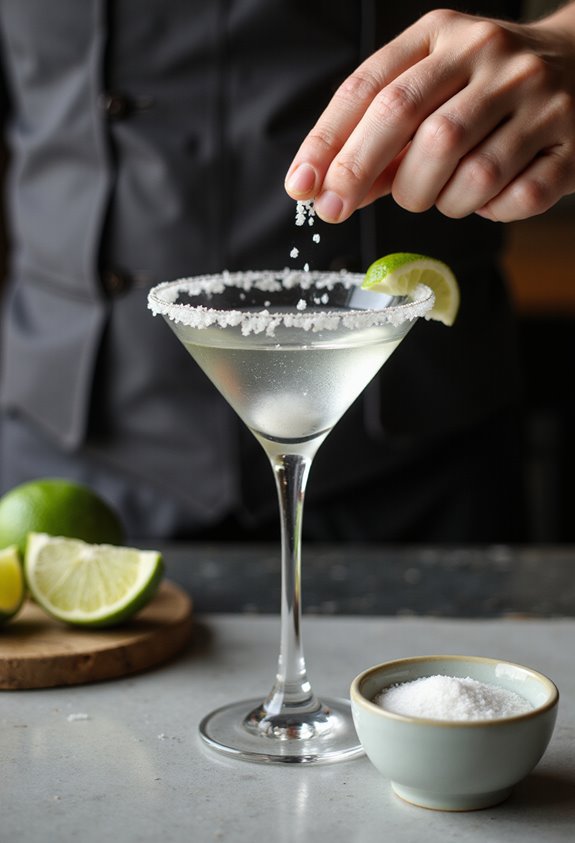
The application of salt rims to cocktail glasses involves several key techniques that can greatly enhance the drinking experience. One popular method is the dipping technique, where the moistened rim is inverted and dipped into a shallow dish of salt, achieving even coverage. Alternatively, the shaking method allows for selective salt application by holding the rim over salt and shaking it onto the glass, which minimizes excess salt falling into the drink. Choosing between these methods depends on personal preference and desired salt exposure. It is essential to properly moisten the rim to guarantee adherence while also considering glass temperature, as chilling can help maintain the salt’s integrity. Careful handling post-application prevents smudging and guarantees a visually appealing presentation. Additionally, using soundproofing features like dampening pads might improve the overall experience by minimizing noise during cocktail preparation.
Enhancing Sensory Experience With Salt
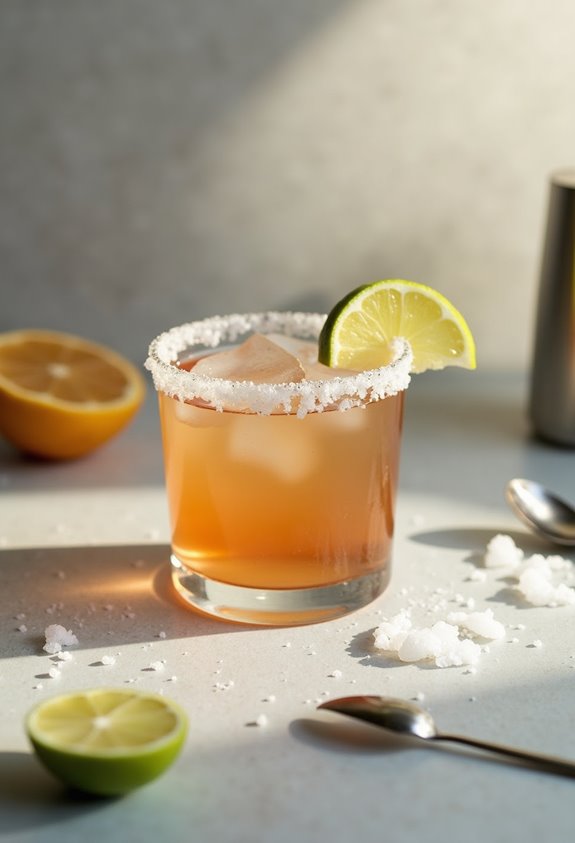
Salt plays an essential role in enhancing the sensory experience of cocktails, particularly through its application as a rim accent. The presence of salt creates a unique sensory engagement that enriches the tasting experience. It balances flavors by reducing perceived bitterness and elevating sweetness, contributing to harmonious profiles in drinks like Margaritas and Bloody Marys. The textured rim also contrasts with the liquid’s smoothness, providing an engaging mouthfeel. This tactile sensation stimulates taste buds differently, amplifying citrus and savory notes. Various salt types, such as smoked or infused salts, further enhance these profiles, allowing for tailored flavor dimensions. Overall, salt transforms a cocktail into a multifaceted experience, elevating both taste and enjoyment with each sip. Additionally, the use of customizable features in cocktails can further enhance the drinking experience, mirroring how unique beer tap handles add character to home bars.
Cultural Significance of Salt Rims in Cocktails
Renowned for its role in elevating the cocktail experience, the salt rim holds significant cultural importance, particularly within Mexican traditions. This practice, deeply rooted in the heritage of classic cocktails like the Margarita, symbolizes both elegance and ritual. Salt rims are not merely garnishes; they convey cultural traditions that enrich the drinking experience. By marking the rim, bartenders signal a connection to Mexican hospitality and respect for flavor balance. The salt rim reflects regional identity, especially within Southwestern U.S. and Mexican border cultures, fostering a sense of belonging among drinkers. Celebrations such as Cinco de Mayo highlight the Margarita’s salt rim as a symbol of festivity, showcasing its role as a cultural emblem that transcends borders and unites communities. Additionally, the use of high-quality materials in bar accessories sets enhances the overall cocktail presentation, making the experience even more enjoyable.
Creative Innovations in Salt Rim Flavors
Innovative approaches to flavored salt rims have garnered attention in the cocktail industry, enhancing both traditional and contemporary beverages. Flavored salt trends now include zesty options like lime and orange, as well as unique varieties such as smoked chipotle and sweet vanilla. This expansion allows mixologists to experiment with innovative pairings that elevate drinks like margaritas and Bloody Marys. Vibrantly colored salts, in shades like ocean blue and fiery red, contribute to visual appeal and cater to diverse occasions. The use of premium rimming salts also adds sophistication, balancing the cocktail’s flavor profile. As consumers seek bespoke drinking experiences, the popularity of these creative innovations continues to grow, demonstrating the evolving landscape of cocktail culture.
Balancing Flavors With Salt Rims
In the cocktail industry, the integration of salt rims plays a significant role in flavor balance. Salt effectively enhances flavor harmony by triggering taste receptors and modulating perceptions of bitterness and sweetness. It suppresses bitterness found in cocktails, particularly those with citrus or herbal components, resulting in smoother drinks. Additionally, salt accents sweetness, allowing a delicate balance among sweet, sour, and bitter notes. This flavor modulation also enhances the aroma during sipping, invigorating the sensory experience. Bartenders strategically choose salt types to complement specific cocktails, ensuring that the flavors resonate fully. By cutting harshness while maintaining the integrity of other tastes, salt rims elevate cocktails to a more enjoyable and complex level, inviting everyone to join in on the delightful experience.
Frequently Asked Questions
Can I Use Alternative Seasonings Instead of Salt for Cocktail Rims?
Absolutely, alternative seasonings can replace salt for cocktail rims, creating delightful flavor profiles. Experimenting with zests or savory blends fosters a sense of community, inviting everyone to explore unique taste experiences together—much like a fun, retro soirée.
How Do I Clean a Glass Rim After Using Salt?
To clean a glass rim after using salt, one should employ effective salt removal techniques, utilizing mild dish soap and warm water as glass cleaning solutions to guarantee thorough rinsing and prevent residue from affecting future drinks.
Are There Health Concerns Associated With Consuming Too Much Salt in Cocktails?
“Too much of a good thing can be harmful.” Health risks associated with excessive sodium intake from cocktails can lead to issues like hypertension and kidney damage, making moderation essential for a social yet health-conscious experience.
Do Salt Rims Affect Garnish Choices in Cocktails?
Salt rims greatly influence garnish choices in cocktails by enhancing flavors and determining compatibility. This savory addition encourages the selection of tart or sour garnishes that balance the salty profile, creating a harmonious drinking experience for enthusiasts.
Can Salt Rims Be Reused on Multiple Cocktails?
Salt rims should not be reused on multiple cocktails. Salt residue can compromise flavor balance, introducing contamination risks and diminishing the sensory experience, ultimately leading to a less enjoyable drink for everyone involved.